
Gerxhaliu: The ban on the import of Serbian goods harms everyone; EU does not open its doors to barriers
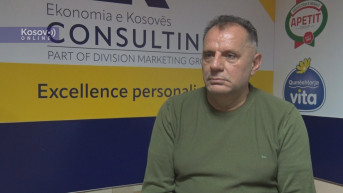
Economic expert from Pristina, Safet Gerxhaliu, states that the ban on the import of Serbian goods to Kosovo, in effect for a full six months, is causing harm to everyone, and he emphasizes that this issue needs to be resolved promptly because the European Union will not open its doors to barriers and those with unresolved problems.
Gerxhaliu, a former president of the Chamber of Commerce of Kosovo, says that economic problems cannot be discussed without political connotations, which slow down positive trends in the Western Balkans.
"We promote a common regional market, the elimination of various barriers, and the fulfillment of agreements within the Berlin Process, which implies the free movement of goods, services, capital, and people. Any barrier, whether between Kosovo and Serbia, Bosnia and Herzegovina, or Montenegro, Albania, and North Macedonia, is not in favor of the European perspective or the normalization of relations in these areas. Therefore, dialogue needs to be strengthened as soon as possible. Officials should not only be seen at events where problems are discussed, but there should also be specific proposals for resolving them. This is the only way we can build a future and a perspective. If we conduct a fundamental analysis of who loses and who gains – everyone loses. No one benefits from barriers," Gerxhaliu states for Kosovo Online.
He points out that due to the ban, the import of goods from Serbia has dropped, but the problem is that it should not be viewed solely through an economic lens.
"Certain products that Kosovo imports are American, German, Austrian, and one should not think that they accept these barriers easily. We may have a decline in imports, but we also have a decline in the export of goods produced in Kosovo because we import certain raw materials from Serbia. In this context, this issue needs to be resolved promptly to build a future and trust, to foster the spirit that one day we will be part of the European Union. And Europe will not accept barriers, it will not open its doors to those with unresolved problems," the economist emphasizes.
Commenting on the fact that the Kosovo Government, led by Prime Minister Albin Kurti, refuses the appeal of Kosovo businessmen and the international community to lift the embargo on Serbian goods, Gerxhaliu says that it is not related to the economy but to politics.
"I think this decision has entered a completely different track; it's no longer about economic rationality but about the political position and the dialogue between Kosovo and Serbia. I think, whether we like it or not, it has entered that framework for problem-solving. Perhaps it was a misstep because you see that businessmen take more steps than politicians. I fear that all of this will somehow be prolonged," Gerxhaliu notes.
He also emphasizes that the issue of the embargo needs to be resolved as soon as possible because, as he says, "dialogue has no alternative, and efforts must be made to eliminate barriers rather than allowing them to persist."
"We have become 'escape countries,' the youth are leaving, visa liberalization comes into effect on January 1, we have no foreign investments, and it is evident that the common denominator for solving all problems is political stability. When you have political stability, you also have new perspectives for direct investments, and without that, we will only perpetuate the Balkan mentality that stifles perspective and instills more fear in the people about the future than it guarantees perspective," our interlocutor believes.
When asked if he expects the lifting of the embargo on Serbian goods, Gerxhaliu says that the Balkans suffer from a political agenda that does not allow room for integration, dialogue, and economic prospects.
"Anything is possible, but it depends least on us. Today, the capital of the Western Balkans is Brussels, and the capital of Brussels is Washington, and in those relations, a solution will be sought," he concludes.


0 comments