
Stanic: Losses due to the ban on entry of Serbian goods to Kosovo amount to 120 million euros
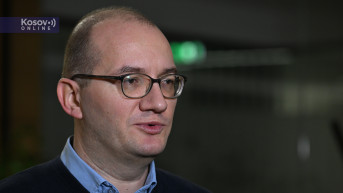
In the six months since the prohibition imposed by Pristina on the entry of Serbian goods into Kosovo, estimates suggest that the direct losses for Serbian businesses have reached 120 million euros, according to Bojan Stanic from the Strategic Analysis Sector of the Chamber of Commerce of Serbia.
The Kosovo Government unilaterally decided on June 15th that products from Serbia, including raw materials, could not be placed on the Kosovo market.
Stanic explains for Kosovo Online that the ban on final products sold in retail outlets is still in effect, primarily affecting the population in Kosovo. This adds to the existing inflationary pressure, forcing residents to buy products that are less price-competitive since they have to be imported from other countries in the region. He points out that, due to the ban, Serbian products on the Kosovo market have mostly been replaced by goods from North Macedonia, Albania, Bulgaria, and even Montenegro.
"It should be emphasized that Serbian goods are the most competitive in Kosovo due to the orientation of the Serbian economy towards production, market size, and the ability to produce and distribute certain goods on a large scale. When we look at the period before the blockade, Serbia had a relatively high exchange with Kosovo, reaching up to 500 million euros annually," Stanic notes.
Commenting on the Pristina authorities' persistent disregard of calls from the international community, business entities on both sides of the administrative line, and foreign companies operating in both Serbia and Kosovo to lift the blockade, Stanic says it is primarily the result of political disagreements between Belgrade and Pristina.
"This is, of course, related to the issue of the final status of Kosovo and Metohija. When we talk about the Pristina side, it should be emphasized that they are violating the CEFTA agreement, of which they are members, which prescribes free trade regardless of political events. On the other hand, they are also violating certain regional initiatives that aim towards the economic integration of the region, such as the Berlin Process and the Open Balkan Initiative. And, of course, they are undermining the interests of their own economy. Companies exporting goods from Serbia to the Kosovo market are mostly owned by foreign capital, and these are final products from the food industry and certain non-alcoholic beverages," Stanic says for Kosovo Online.
He emphasizes that the Chamber of Commerce of Serbia has excellent cooperation with the Chamber of Commerce of Kosovo, which has also stressed the need to overcome political disagreements for the economy to function, especially considering that it causes more significant damage to the economy of Kosovo.
"For the simple reason that investments in Serbia continue to come. The blockade affects our companies oriented toward the Kosovo market, but at the level of the entire economy, it is not a significant problem. It becomes much more serious when discussing the attractiveness of Kosovo and Metohija for investments, not only from Serbia and the region but from a broader area of Europe," our interlocutor emphasizes.
He expects that the import ban will have to be lifted at some point.
"Based on previous experience, I think the blockade will be lifted at some point, which will be related to the progress of the negotiation process between Belgrade and Pristina, but certainly also under certain pressure from the mediators in this process, which is the EU," Stanic says.
He also reminds of the tariffs that the authorities in Pristina imposed on goods from Serbia, which were in effect for a longer period than the current import blockade.
"When tariffs on Serbian goods were lifted, the volume of trade with Kosovo quickly returned to the level it was before that crisis, within a year and a half. Especially when we talk about Serbia's exports to Kosovo, which are significantly higher than imports. This is one of the markets where we achieve a convincing surplus in trade. We had informal campaigns, such as calls to boycott goods coming from Serbia, but they did not catch on in the local population, which continued to buy Serbian products," he says.
However, he points out that the crisis in relations between Belgrade and Pristina affects the attractiveness of the entire region, as it raises the question of whether these disagreements might spill over into other countries, resulting in long-term uncertainty for investments.
"The economy needs to overcome political disagreements. They can bring short-term benefits for politicians, but in the long run, economic potential is undermined, and the question is whether it can return to the level it was," Stanic concludes.


0 comments