
Gogic: Attacks on Basha are part of “political archaeology” in Kosovo
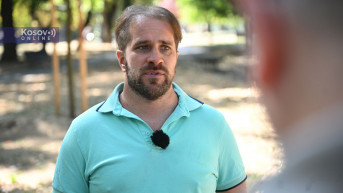
Political analyst Ognjen Gogic stated that the campaign against the newly elected Speaker of the Kosovo Parliament, Dimal Basha, is part of the “political archaeology and forensics” in Kosovo, as well as a “show of strength” in the context of the political campaign ahead of local elections.
Several opposition parties accused Basha of violating the Constitution by claiming that the Assembly had been constituted. At the same time, KLA veterans demanded his resignation, accusing him of speaking negatively about the organization in an academic paper.
Basha immediately denied this claim and later publicly apologized for the text.
Gogic pointed out that all accusations against him should be viewed in light of the unresolved political crisis in Kosovo, as well as the fact that it is considered “sacrilege” to mention the KLA in any negative context.
“Whoever had found themselves in that position would probably have been the target of attacks as well, because the political crisis in Pristina remains unresolved. There are still no clear relations among the parties in parliament, especially regarding government formation. Now we see ‘archaeology’ and ‘forensics’ at play—searching for anything that can be used for campaigning. In Basha’s case, they dug up that text, a 13-year-old academic article he co-authored in which the KLA is mentioned in a negative light. Of course, that alone is enough in Kosovo to ‘cause a stir,’ since it is ‘sacrilege’ when someone in any way questions the KLA,” Gogic told Kosovo Online.
He stressed that this is not only a campaign against Basha and Self-Determination, which nominated him, but also against the Democratic Party of Kosovo (PDK), which supported his election while also “inheriting the legacy of the KLA.”
“This is also an attack on the PDK. It is the party that enabled his election, and it is supposed to uphold the values of the KLA. It is completely absurd that it supported him. But this is simply part of the political campaign being waged in Kosovo—both against the ruling party and in the context of a new balance of power ahead of the local elections,” Gogic argued.
He is convinced that such information is being spread not only to “weaken” Self-Determination’s support, but also that of the PDK.
“But this is a legitimate and everyday practice in political life. There is nothing unusual about it,” Gogic underlined.
The analyst emphasized that Basha’s election as Speaker of Parliament was “a coincidence.”
“Basha’s election was a matter of circumstance. He himself was surprised to find himself in that position. The fact is, there was a severe blockade of the Assembly due to party rivalries over who could be a candidate. In the end, Self-Determination proposed Basha probably not expecting anyone to vote for him. It was a bluff that backfired,” Gogic explained.
He added that opposition parties had from the start insisted they would only support a Self-Determination candidate who was not simultaneously a member of the technical government.
“So they finally proposed someone outside the government, expecting other parties to reject him so that they could claim it was the others who were blocking the Assembly. However, they miscalculated. Basha’s election was therefore probably a surprise for all political actors,” Gogic concluded.

0 comments