
Gogic: Banjska remains an isolated event with no significant consequences for the dialogue
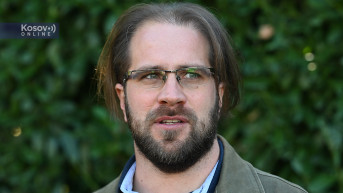
The conflict between a group of Serbs and the Kosovo Police in Banjska, which occurred exactly two months ago, resulting in the deaths of three Serbs and one Kosovo police officer, is, according to political analyst Ognjen Gogic, an isolated event that has not had significant consequences for the negotiations between Belgrade and Pristina.
As he assesses it, Serbia was in an unfavorable position both before and after Banjska due to the conditions set by the EU, and the acceleration in the negotiations we are witnessing is a result of the earlier idea that some tangible results should be achieved by the end of this year, as the EU is heading for elections in 2024.
"First of all, during the events in Banjska, during the week of September 24, Serbia already acted constructively. This is not widely known to the public, but from what is known, there were already contacts between Belgrade and the international community at that time. Belgrade played a significant role and prevented the conflict from spiraling out of control, and, to some extent, calmed the situation. After that, legal proceedings and actions were taken against the individuals considered responsible for the event, namely Milan Radoicic, so Serbia once again demonstrated that it did not support this event as it brought the suspect to justice. And finally, and perhaps most importantly, that event remained isolated. In no way can the events in Banjska be interpreted as a reflection of Serbia's policy; it remained a sporadic event that did not repeat itself afterward, nor did the situation escalate in the north, allowing someone to claim that it was a policy. Banjska remained an isolated event, and in that sense, the event did not have significant consequences for the negotiations, regardless of how it is being portrayed," Gogic says.
He believes it would be hypocritical from the perspective of the international community to attach too much importance to this and cites examples from the 1990s when, as he says, the international community supported the KLA, which carried out terrorist activities.
"It even got involved in the war on the side of the KLA, and in 2004, when there was violence in March in Kosovo, it was later rewarded because the policy of the international community was that due to that attack, the resolution of the status must be accelerated and Kosovo must be given independence. It would be hypocritical for Serbia to be put on some pedestal of shame because of Banjska after such a policy in the past," Gogic says.
As he assesses, the EU did not favor Serbia over Kosovo in the dialogue, even before Banjska.
"The position of Belgrade in the dialogue and negotiations has never been favorable. There was an impression created in the public at one point that Belgrade had a stronger negotiating position than Pristina because there were many criticisms of Albin Kurti and his policies from the EU in recent months, which we were not used to. For the first time, something like that happened, that Pristina was subjected to criticism, and not just criticism but also sanctions because punitive measures were imposed against Kosovo in June. However, that never meant that the EU actually favored Serbia over Kosovo. And this is best seen in the recent calls from European officials for Serbia to de facto recognize Kosovo," Gogic says.
The demand for de facto recognition, he points out, is not a new condition of the EU.
"This is not a new condition. The entire Franco-German proposal presented last year actually implies de facto recognition of Kosovo by Serbia. Only the terminology is new; the new thing is that they openly said what they actually wanted and called things by their real names, but the condition itself is not new. In this process, we have something called 'biased mediators.' So, the EU is not neutral towards the dialogue and its outcome; it wants the dialogue to end with Kosovo strengthening its position on the international scene, so it has always favored Kosovo. It's just that Kosovo, at one point, complicated and hindered those EU plans due to Kurti's behavior. They were dissatisfied with his conduct and views, but they didn't change their stance. No one came and told Kosovo it had to accept returning to Serbia; instead, they came and told Serbia it needed to recognize Kosovo. In that sense, Banjska didn't significantly change the situation. Serbia was in an unfavorable position due to the conditions the EU had towards it, both before and after Banjska," he states.
However, he adds that the events in Banjska may have led to a change in EU rhetoric towards Serbia to some extent.
"It's about the fact that what the EU is asking from Serbia is practically unacceptable as such because it is an extremely difficult and big condition, and it is actually applying a tactic to try to persuade Serbia to accept these things through a softer approach. If some sharp rhetoric followed the demand for de facto recognition, that would be too much. The question arises whether the EU should then call on Israel to recognize Palestine, for example, or some other actors. It is a very controversial condition, and the EU is trying to achieve it in a softer way, and Banjska has not significantly changed the situation in that sense," Gogic explains.
He believes that the accelerated demand for the formation of the CSM, however, does not have much to do with the events in Banjska.
"It's about the deadlines defined earlier. From the beginning of this initiative, the idea was to achieve some tangible results by the end of this year or, at the latest, by the beginning of next year. The European Council will have its last summits in February or March, and after that, the EU is heading for elections. So, from the beginning, the deadline to achieve some results was the elections for the European Parliament, and that deadline is approaching, and the EU has no result, moreover, the situation has worsened since they started implementing this initiative, so the acceleration being talked about is a consequence of the fact that this deadline is approaching, not because Banjska drastically changed the situation," Gogic concludes.

0 comments