
Gogic: Borrell cannot say that the conditions for lifting sanctions are met when Pristina has done nothing

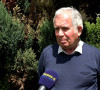
Political scientist Ognjen Gogic tells Kosovo Online that before discussing the lifting of European Union sanctions imposed on Kosovo last June, the question should be raised whether they were ever applied in the first place. He points out that Pristina has not done anything that was required of it to de-escalate the situation in northern Kosovo, which led to the imposition of sanctions.
Gogic reminds that the EU announced last June that it had imposed punitive measures, not sanctions, against the government in Pristina for failing to take steps to de-escalate the situation in northern Kosovo, and that these measures included suspending high-level meetings, both bilateral and multilateral, and discontinuing EU funding for projects.
"Neither of these measures was ever implemented. There is no example of anything being suspended or canceled because someone invoked these sanctions and said, 'Due to these EU sanctions, Kurti or Osmani are not attending a meeting.' There is no example of an EU-funded project in Kosovo being discontinued because of these sanctions. To my knowledge, projects funded by the EU are still ongoing, and Kosovo can still apply for various projects and funds. The imposition of sanctions was a mere formality and a rhetorical matter, so the lifting of sanctions would also be merely formal," Gogic points out.
He adds that the government in Pristina would certainly like to declare that the sanctions have been lifted because it would be a political gain for them.
"Kosovo is heading into elections, and for the government in Pristina, it would mean a lot in their campaign to say that they have managed to lift these punitive measures. However, whether the sanctions are in effect or not holds no real significance," Gogic believes.
He emphasizes that the sanctions are related to the EU's de-escalation plan from June 2023, which involves the withdrawal of special police from municipal buildings, a step that has not been taken.
"This was evident during the voting period in the north for the dismissal of mayors in four municipalities when all these buildings were surrounded by special police. Citizens were supposed to be allowed to exercise their democratic right to vote, but there was special police preventing them from even approaching these buildings. There were reports that Kosovo was gradually withdrawing special police, but it is not known to what extent this was actually done, and the impression is that the special police remained there," Gogic says.
Regarding the second demand related to mayors working from alternative locations, our interlocutor notes that this demand was also not met because mayors from Northern Mitrovica and Leposavic continued to work from municipal buildings, while mayors from Zvecan and Zubin Potok spent some time outside municipal buildings but later returned.
"In the end, the most important condition was to hold elections in northern Kosovo, which did not happen. Referendums were held, but those were not elections. So none of these conditions were met. According to Peter Stano's statements, the procedure for lifting sanctions would involve EU High Representative Josep Borrell submitting a report to the European Council stating whether Kosovo has fulfilled these conditions, and then the European Council would decide to formally lift them. However, the conditions have not been met, and Borrell cannot claim that they have," Gogic emphasizes.
He also points out that the EU is in campaign mode and preparing for the European Parliament and European Council elections, so they have much more urgent matters to attend to than dealing with "some fictitious sanctions."
"It is completely unrealistic to expect anyone in the European Council to spend time on this issue when they have much more important and urgent matters. Furthermore, if you were to ask some bureaucrats in Brussels, they probably wouldn't even know that there are sanctions against Kosovo. Kosovo, in a way, is perhaps a victim of neglect and laziness in the EU," Gogic concludes.

0 comments