
Gogic: EU and the US should change their approach, pressures did not yield results; Pristina should take the first step toward de-escalation
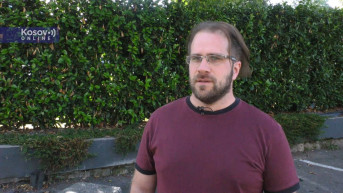
Political analyst Ognjen Gogic stated for Kosovo Online that the pressures from the EU and the US on Pristina and Belgrade to de-escalate the situation in northern Kosovo were proving counterproductive. He suggests that the international community should reconsider the effectiveness of these pressures and change their approach.
Speaking about possible new pressures on Serbia after the events in Banjska, which are being called for by certain EU countries, Gogic says that the question arises as to what their effect would be at this moment.
"The question arises as to what would be the use of pressure on Belgrade in order to unlock this dialogue process and the implementation of the agreement when it's Pristina's turn. Pristina needs to take the first steps, including scheduling new elections in the four northern municipalities and starting the formation of the Community of Serb Municipalities. Until this happens, Belgrade is not in a position to do anything. Therefore, pressuring Belgrade at this moment would not make sense because we are waiting for Pristina's reactions," he says.
Gogic suggests that Belgrade could be expected to act later, once the conditions set for Pristina are met, without imposing new criteria for the return of Serbs to institutions.
"The moment elections are scheduled, and if Pristina genuinely begins to work on forming the CSM, Belgrade should encourage Serbs to return to institutions primarily through participation in those elections and reintegration into municipal structures," Gogic believes.
He emphasizes that there will be pressure on both sides at this moment, but primarily on Belgrade, to determine the circumstances of the armed incident in Banjska.
"In this context, Belgrade could provide certain information about the individuals who were part of that armed formation and the origin of the weapons. Belgrade could expect pressures of this kind," he points out.
Gogic also notes that discussions and measures related to pressures have been ongoing for months, with calls for de-escalation, and yet "the situation on the ground continues to worsen."
"The more calls for de-escalation, the more the situation escalates. This is a new step where human lives have been lost, so this is a moment for Brussels and Washington to revise their policy and approach to the dialogue because it is evident that this approach is not yielding results; it is, in fact, counterproductive," he says.
He adds that those who talk about pressures and implement them should consider whether these pressures are effective or if they lead to more radical actions by both sides, ultimately resulting in escalation and incidents.
"Specifically, if we consider possible measures, the only measure that could influence both sides is visa liberalization, which should come into effect for Kosovo on January 1st. If that were genuinely suspended, it would lead to a change in policy in Pristina. Likewise, if the visa-free regime for Serbia were questioned, it would make Belgrade more constructive," Gogic concludes.

0 comments