
Gogic: Lajcak’s diplomatic offensive in New York is an attempt to appease Pristina
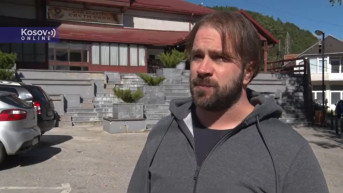
Political scientist Ognjen Gogic assesses that the chief European mediator in the dialogue, Miroslav Lajcak, tried in New York, with the help of the US, to persuade Pristina to return to the dialogue, but that it is difficult to expect any significant results from this diplomatic offensive.
"Lajcak is indeed in a kind of diplomatic offensive, but it is more aimed at salvaging what can be saved in the dialogue, rather than achieving new results. His offensive is actually more directed towards Pristina," Gogic said for Kosovo Online.
He believes that the numerous meetings Lajcak had last week on the sidelines of the UN General Assembly were not aimed at new pressures on Pristina to halt its unilateral actions but rather "an attempt to appease them so that they would return to the dialogue."
"The issue is that Pristina has effectively abandoned the dialogue. It has opted for unilateral moves because it believes they enable it to achieve its goals more easily, thereby stepping out of the dialogue. What Lajcak has been trying to do over the past few weeks is to convince Pristina to return to the dialogue," Gogic emphasized.
He reminds that a few weeks ago, Lajcak visited Pristina, where he conveyed two important messages: first, that the issue of the main bridge over the Ibar River would not be part of the dialogue, and second, that Serbia had withdrawn its letter expressing reservations about the Ohrid Agreement.
"Both messages were directed at Pristina with the intent to appease them and get them to return to the dialogue based on these concessions supposedly made by the Serbian side. However, this has not yielded results," Gogic noted.
This is also the reason, according to this political scientist, for Lajcak’s visit to the US and the meetings he had with Prime Minister Albin Kurti and US Envoy for the Western Balkans Alexander Kasanof.
"Lajcak, this time in the US, said what Kurti wants to hear, which is that the Ohrid Agreement must be implemented. He conveyed this in the presence of Kasanof, intending to show that the Americans stand behind this. However, this is not enough, and it won’t be enough because Kurti does not want the agreement to be merely implemented, as that would mean the formation of the Community of Serb Municipalities, something Kurti is not interested in," Gogic stressed.
He says that Kurti is solely interested in signatures on the Ohrid Agreement, which he has stated on several occasions.
"He believes that if the agreement were signed, it would lead to new recognitions of Kosovo by the five EU member states that do not recognize it. And that is what he wants. But Lajcak cannot guarantee him that. So, this initiative by Lajcak is aimed at getting Pristina back into the process somehow, but it will be short-lived, especially since Pristina is preparing for elections and does not have much trust in Lajcak, expecting him to leave that role," Gogic opined.
He also adds that Lajcak, on the other hand, does not have the mechanisms to compel Serbia into anything either.
"He is not someone who holds a key role in the European Union. That is up to the member states, and only when the member states take a stance that something needs to be done, there might be some results," Gogic emphasized.
When asked how likely it is to make progress toward normalization in such a situation, Gogic said that the implementation of agreements is "by definition contrary to unilateral moves."
"Dialogue implies reaching an agreement, finding solutions to an open issue, and then implementing it. The opposite of that is unilateral measures. The opposite is what Pristina is doing by changing the reality on the ground with its unilateral and uncoordinated actions, creating a fait accompli," Gogic warned.
He adds that Pristina is doing this because it has calculated that unilateral measures are more beneficial, as they help achieve its goals, which are currently focused on gaining political points during the pre-election campaign.
"Pristina sees these unilateral moves as more advantageous than returning to dialogue and negotiating deals. For instance, if the issue of temporary authorities in northern Kosovo were raised in the dialogue, and Pristina said it wanted them abolished, Belgrade’s response would be either 'no' or 'fine, but then the Community of Serb Municipalities must be formed to take over some of their responsibilities,' which Pristina would not accept. So Pristina has calculated that unilateral actions will benefit it more than being in dialogue and implementing agreements," Gogic said.
He concludes that the answer is simple.
"The agreements are dead letters on paper and no longer guarantee anything on the ground," Gogic concluded.

0 comments