
Gogic: Mayors remain until the end of their mandate; this precedent sets a model for future elections in the north
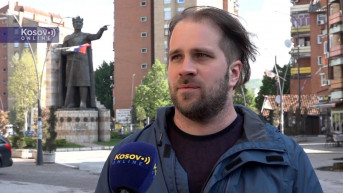
Political scientist Ognjen Gogic, noting that the low or almost nonexistent voter turnout for the dismissal of mayors in four municipalities in the north was expected, points out that what is most concerning is the possibility that yesterday's organization of voting becomes a model for organizing some future elections without consulting the local population.
Gogic says for Kosovo Online that during the organization of the referendum, the democratic rights of citizens, the rule of law, and human rights were violated because citizens were deprived of the opportunity to democratically elect legitimate representatives who would make decisions on their behalf.
"The low or almost nonexistent turnout was expected since Serbian parties called for a boycott, and it was not expected that people would spontaneously participate in this voting, especially considering the circumstances under which the voting took place, prompting the boycott," he stated.
He says that it was uncomfortable to be at polling stations surrounded by police, and many of the commission members present there do not speak Serbian.
Furthermore, he adds, the novelty of cameras at polling stations also posed a problem and was a reason for citizens to be further deterred from coming out and expressing their will.
"The cameras were installed in a quite controversial manner. It is not clear what they were for other than to discourage people from coming to vote, so the entire atmosphere did not indicate a desire to enable citizens to exercise their civic rights and express their opinion on the mayors in the four municipalities in the north. I don't think anyone doubts, neither the mayors nor the authorities in Pristina, nor the international community, that these mayors lack legitimacy and that they do not have the support of the citizens," Gogic points out.
According to him, since the mayors were not removed from office, it can be expected that they will remain in their positions until the end of their mandate, which expires in the fall of 2025.
"Citizens were not allowed to express themselves freely, conditions were not provided, but the mayors also need to consider that no one expressed support for them. So, the question here was whether you are for or against the dismissal, and no one came and said, 'we are against the dismissal,' so they have not confirmed that they enjoy the support of the citizens," he notes.
Gogic emphasizes that perhaps the main message the day after the referendum is that this could be a precedent and a model for future elections in the north, which is also what concerns him the most.
"The question is whether parliamentary elections expected in maybe six months will be organized in this way, and then later perhaps the next local elections. I fear that in this way, the Central Election Commission has set a precedent by organizing the electoral process without consulting the local population. The basic problem here was that the election organization proceeded without establishing cooperation, communication with the people living in the north, who were not involved in the organization of the process, and that's why these problems existed. If some future elections are organized in the same way, it may give an advantage to either Albanian parties in these areas or some other Serbian parties more to the liking of Pristina," he says.
Regarding the views of the international community that the voting was organized and that there were conditions to vote, but the Serbs did not take advantage of it, Gogic says that the international community is "sweeping things under the rug and looking the other way."
"They only deal with some formal matters. For them, it is important that this was organized regardless of how it went, and they show no interest in the fact that the conditions were not adequate. This referendum was organized in a way that hinders democratic expression of will, and what concerns us most is that the international community is not concerned about it," Gogic emphasizes.
As he says, the issue here is basic political and human freedoms that could not be realized.
What is problematic here, he adds, is the lack of an adequate response from the international community precisely because there are other elections and processes coming where it is crucial to respect rights, justice, legitimacy, and legality.
"And here, it's just formality that is appreciated, and I fear that this will be a cynically sufficient situation, and the international community, in light of this referendum, will withdraw the punitive measures imposed against Kosovo, which were actually never implemented, but since they were formally introduced, they will now be formally removed under the pretext that some referendum was held and that Kosovo fulfilled the form, or that basic requirement set before it," he says.
Reminding that Kosovo is in the process of approaching the Council of Europe, and that it is crucial for that international organization that a candidate for membership respects democracy, the rule of law, and human rights, Gogic emphasizes that none of this has been respected in these processes.
As he states, in northern Kosovo, there are four municipalities where citizens' right to local self-government is violated, and where citizens do not have the right to democratically elect legitimate representatives who will make decisions on their behalf.
"This is a violation of all Council of Europe principles, a violation of democracy, there is no democratic will here, a violation of the rule of law since these votes were held in a way that did not respect basic norms and principles of the electoral process, and a violation of human rights because these mayors make decisions that are not in the interest of the local population, and this should concern the international community, but what concerns me is that it doesn't concern the international community," Gogic concludes.


0 comments