
Mulaj: Kosovo has the highest inflation in the region
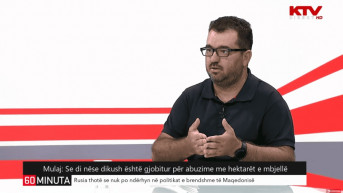
Economics expert Ismet Mulaj assessed that claims of economic growth and an improved investment climate do not reflect the actual state of Kosovo's economy, stressing that the reported growth is largely based on consumption, remittances from the diaspora, and social assistance, rather than on structural reforms and investments in new production capacities that would ensure sustainable development.
In an interview with Ekonomia Online, Mulaj said that the use of statistics for political purposes is not a new phenomenon, adding that the economic reality in Kosovo differs from the figures being presented.
"Kosovo currently has the highest inflation in the region, according to expert reports by the European Union and the World Bank. Economic growth is not the result of increased production, but rather of higher consumption and rising prices, money coming from the diaspora, and, in fact, social assistance distributed by the Kosovo government," he said.
He added that Kosovo continues to face a lack of structural reforms, as well as problems in the energy sector, legal certainty, and infrastructure, all of which negatively affect the attraction of investment.
"Kosovo faces enormous problems with electricity supply, major issues with legal certainty, as confirmed by various reports, as well as infrastructure problems. If a company wants to invest in Kosovo today, it faces significant difficulties in obtaining land from the state to build business facilities, and the costs are high. Political instability not only damages Kosovo's image, but also means that it is not a serious partner for communication with companies interested in investing," he emphasized.
Mulaj stressed that remittances from the diaspora continue to provide important support to household economies, but do not create new production capacities.
He also criticized the level of implementation of capital investments, assessing that delays in projects create negative ripple effects throughout the economy.
"That is why the Kosovo government should adopt a completely different approach toward the business sector and budget spending. Today, almost no capital investment project is completed on time. All companies that work on state contracts face problems collecting payment for completed work if projects are not carried out within the prescribed deadlines. This creates a negative ripple effect in the economy," he explained.
According to Mulaj, Kosovo needs a higher rate of economic growth in order to become competitive and ready for integration into the European market.
"Of course, this will continuously increase inflation and lead to moderate economic growth. Kosovo does not need growth of 3.5 or 5.5 percent, but more than 8 percent in order to become a competitive economy and move closer to the standards required for potential membership in the European Union. The economy must be prepared to compete with companies from the European Union. If we do not prepare our businesses, many of them will go bankrupt, and we will become a country of importers rather than producers," Mulaj concluded.


0 comments