
Gogic: The question is in whose name did von der Leyen call Serbia to de facto recognize Kosovo
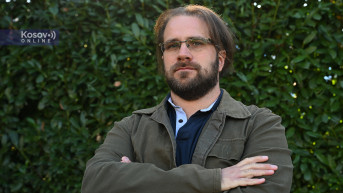
Political analyst Ognjen Gogic says for Kosovo Online that it is a question in whose name the President of the European Commission, Ursula von der Leyen, acted when she requested Serbia to de facto recognize Kosovo, knowing that five EU member countries do not recognize Kosovo's independence.
"Ursula von der Leyen is the President of the European Commission, but she is also a politician from Germany, and Germany has its own Kosovo policy. She also comes from the CDU, the Christian Democratic Union, which actually formulated the idea of de facto recognition and the normalization agreement, which essentially means de facto recognition. So it is a question in what capacity she was speaking and whether she may have exceeded her authority as the President of the European Commission," Gogic says.
He believes that Serbia has the right to raise this question.
"Serbia can ask this question: whether she stepped outside of the frameworks given to her. However, it should be noted that in February, the European Council accepted the Franco-German proposal as a European one. So, the European Council, in which all EU countries, including those that recognize Kosovo and those that do not, have accepted this Franco-German plan as a European proposal for resolving this issue," Gogic notes.
Our interlocutor explains that this should be interpreted in two ways.
"On the one hand, it is still a fact that EU countries that do not recognize Kosovo would not object if Serbia decided to change its policy. Spain, Greece, or Romania would not prevent Serbia if it decided to change its approach to Kosovo and de facto recognize its independence. But the question is whether they would accept it as a condition for Serbia. They accepted the proposal as a model, as a possibility, but I am not sure that these non-recognizing countries would stand behind that proposal if it were presented as a condition for Serbia. Not only the non-recognizing countries, but also Hungary and even other countries if recognition became a condition. Because in international relations, one country cannot be conditioned to recognize another country. It is the sovereign right of every country, and it would be very controversial and divisive within the EU and among those who recognize Kosovo if it were indeed a condition," Gogic says.
He believes that the Franco-German proposal has been more accepted as a possibility, maybe even an appeal, rather than an official condition.
"It cannot be formulated that way. It is true that in EU documents, Kosovo is still marked with an asterisk because its status is not prejudiced, as the EU cannot recognize Kosovo's status or express whether Kosovo is a state or not. However, if Serbia were to de facto recognize Kosovo, perhaps other non-recognizing countries would do the same, and then the EU could change its position if a unanimous position were reached on that issue. That's why it was important for the President of Serbia to send a message that nothing agreed upon implies that Serbia is de facto recognizing Kosovo. This is the reason why these other non-recognizing countries have not changed their positions. So, there is a clear position that there is no de facto recognition of Kosovo by Serbia, and that's why these other non-recognizing countries haven't changed their positions either," Gogic believes.
As he adds, the original idea behind the Franco-German proposal, i.e., the Brussels-Ohrid Agreement, was to use it as a mechanism to lobby non-recognizing countries to also recognize Kosovo, and if Serbia accepted that agreement, for them to change their positions, recognize Kosovo, and eventually, Kosovo could join NATO.
"I think that danger has been removed; it could have happened in March already. Now, the whole European proposal has lost its point, so new recognitions are not expected," Gogic concludes.



0 comments