
The Government of Kosovo: We have never made a decision to ban the import of goods from Serbia
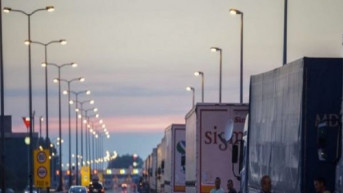
The Government of Kosovo announced in June last year that it had made a decision to ban the import of goods from Serbia. However, after a request from the Albanian Post portal for access to official documents to see the mentioned decision, the Prime Minister's Office admitted that no such decision exists, reports Demokracia.
"After processing your request for access to public documents, we inform you that the Government did not hold a session on June 15, 2023. We also inform you that there is no Government decision on banning the import of Serbian products," stated the response from the Prime Minister's Office.
On June 15, Kosovo Prime Minister Albin Kurti, at a press conference with Interior Minister Xhelal Sveçla, said that the measures against Serbia were not economic and commercial but security-related.
"A purely security measure"
"As security measures, we decided on restricted traffic and enhanced controls until further notice," he said.
Albanian Post requested access to official documents to see the executive decision banning Serbian goods from entering Kosovo, and from the already obtained response, it was confirmed that the Government had never made such a decision.
This office explained that it was a matter of "security measures," not commercial measures, and that security institutions decide and implement them based on their assessments.
Already on June 15, 2023, it was reported that the Government of Kosovo's decision to block Serbian goods was never finalized.
Sources from the Kosovo Government at that time said that the decision was communicated verbally after news that Serbian forces had kidnapped three police officers on Kosovo territory, but when the time came to write, photograph, and publish the decision on the Government’s official website and deliver it to the Ministry of Industry, Enterprise, and Trade, this was not done.
"There was likely external interference, as we were ready and expected to deliver the decision to the Ministry, but that did not happen," a source said.
This decision, which was never made, now jeopardizes Kosovo’s European future.
This was confirmed by the German Special Envoy for the Western Balkans, Manuel Sarrazin.
The German diplomat visited Kosovo twice within eight days last week to adequately prepare for the Berlin Process and regional cooperation and met with Kosovo Prime Minister Albin Kurti.
At two of these meetings, the German diplomat insisted that Kosovo suspend the decision banning Serbian goods from entering Kosovo.
Sarrazin confirmed that during both visits to Kosovo, he received a negative response from Kurti regarding the request for a compromise within the framework of CEFTA - the Central European Free Trade Agreement.
In a recent interview with Radio Television of Kosovo (RTK), the German diplomat, emphasizing that Kosovo cannot block other countries in the region in this process, said that "we will not invite Kosovo to the temporary mechanism if it does not proceed with removing the trade measures."
Sarrazin also mentioned the consequences Kosovo could face if it does not act according to German advice regarding CEFTA, noting that some people in Brussels told him that if Kosovo blocks CEFTA, it would be very difficult to join the EU Growth Plan.
According to him, with such a negative approach, citizens will face the consequences.
"So, you can only block yourselves, you cannot block others," he reiterated.
What did Kosovo offer?
Unlike Sarrazin, the advisor to the Kosovo Prime Minister, Jeton Zulfaj, stated that during the Kurti-Sarrazin meeting, a compromise solution was found regarding the possibility of lifting the decision to ban the import of goods from Serbia within the CEFTA framework, but it was Serbia that conditioned this solution.
"After three years of Serbia's blockade within CEFTA, we have a compromise solution. Serbia has now conditioned this solution on Kosovo lifting its security measures at the border crossings with Serbia. These two issues are not connected," Zulfaj wrote.
Zulfaj further explained that Kosovo's measures are not related to trade but stem from "threats to our national security, which are not implemented by our Minister of Trade but by our security agencies."
Offered membership with an asterisk
Kosovo has been a member of CEFTA since 2007, but it is represented through the United Nations Mission in Kosovo (UNMIK).
For this reason, Germany, in exchange for removing obstacles against Serbian goods, offered Kosovo representation with an asterisk in CEFTA, instead of continuing representation through UNMIK.
CEFTA aims to facilitate trade exchange between Western Balkan countries.
Other CEFTA member countries include Albania, North Macedonia, Serbia, Bosnia and Herzegovina, Montenegro, and Moldova.


comments