
Grubjesic: Without the formation of the CSM, there will be no progress in the dialogue
Over the past month, quite a number of politicians paraded through the dialogue between Belgrade and Pristina, either by direct visits to the region, or by making proposals for resolving the Kosovo issue. For some, it is indeed a job for which they receive a salary, some of them joined the game and surprised the public, but all of them have in common the search for the "holy grail": a formula for de-escalating the situation in the north, writes Blic.
The list includes the special forces of the European Union and America, Miroslav Lajčak and Gabriel Escobar, as well as the prime ministers of Albania, Hungary, the Netherlands and Luxembourg, Edi Rama, Viktor Orban, Mark Rutte and Xavier Bettel.
"They came so that Kosovo wouldn't turn into a new Ukraine. But all that is a shortcut to failure, I'm afraid that it will be like the popular saying, 'too many cooks, spoil the broth'," Aleksandar Popov, director of the Center for Regionalism, told for Blic.
One of them, Lajcak, spent three days last week in talks with officials from Belgrade and Pristina, to see if he would take the talks about Kosovo off the ventilator.
He arrived at these addresses as soon as the doors were closed by the Prime Ministers of the Netherlands, Rutte and Luxembourg, Bettel, who warned that "the growing tension between Belgrade and Pristina is causing great tension", called for the normalization of relations, and said that it is "important for both sides and the whole region".
It was also important for Hungarian Prime Minister Viktor Orban, who got involved in the story and, to the surprise of many, asked Serbian President Aleksandar Vucic during his visit to Belgrade to let the Kosovo special forces who were arrested on our territory go free.
Orban, Rama, Dritan..
Albanian Prime Minister Edi Rama also decided to visit the region, three days ago he started a tour of the Balkans, during which Kurti refused to see him. Previously, he raised dust when he sent a proposal to Paris and Berlin for the formation of the Community of Serbian Municipalities and the organization of an international conference, from which, as he said, it would not be possible to leave until a solution is found.
Before him, the Prime Minister of Montenegro, Dritan Abazovic, tried to get involved, and after a meeting with the Prime Minister of Kosovo, Albin Kurti, offered that his country host the next round of dialogue between Belgrade and Pristina, with the involvement of European and American officials.
"I think that all this is an echo of the realignment of the events surrounding Ukraine, and the effort to resolve the crisis point, Kosovo, so that it does not explode," Popov tells for Blic.
"But there are high chances that it will do more harm than good. If two strong factors, the EU and the USA, have not been able to get the dialogue in order for more than two years, then it is unlikely that all the others will be able to do it," Popov believes.
"USA dictates everyone's pace"
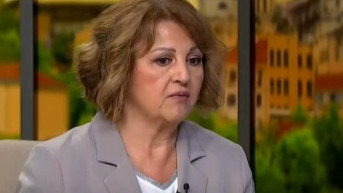
Suzana Grubjesic, vice president of the Center for Foreign Policy, also thinks that the crisis in Ukraine has was a trigger. She points out for Blic that one player consciously dictates the pace, but that the compromise that all these mediators are chasing requires only political will.
"What puts Kosovo in the focus of interest is the Russian aggression against Ukraine and the effort to preserve peace and stability in the Western Balkans region by turning the crisis points, namely Kosovo and Bosnia and Herzegovina, into stable areas. The main role in this is played by the USA , which are now acting in coordination with the EU. I still believe that only political will is needed for a compromise and that it exists on the Kosovo side, but not necessarily with the current leadership. The punitive measures against Kosovo by both the EU and the USA speak in favor of this and there will be even more if there is no clear indication of willingness to compromise," says Grubjesic.
There is no end to the list of politicians who got involved in the dialogue, two specialists from Paris and Berlin, Jens Plettner and Emanuel Bonn, managed to reach an agreement and the Ohrid Agreement in Macedonia in March.
"The number of intermediaries is not important"
True, it never really came to life, but Grubjesic points out that it is a map for further talks and that the number of mediators is therefore not so important.
"There is an agreement in Brussels and Ohrid, and there should be no dilemma as to what needs to be done - first of all, the implementation of Pristina's outstanding obligations from 10 years ago from the first Brussels agreement on normalization, and then everything else. Without the formation of the CSM, there will be no progress in dialogue. If this is not possible, and it has been shown in these 10 years that there is no readiness of the Kosovo authorities to do this, then the number and functions of mediators do not play a decisive role," says Grubjesic.
Unlike the EU and the USA, Kurti plays his role and does not give up on it, and Popov wonders what is happening behind the scenes and whether perhaps the international forces let things go so far that Kurti achieves what he intended and cleansed the north of the Serbs .
"All those mediators who have been involved so far have made a mistake in their steps, and on several occasions. Everything that happened could be assumed, and now instead of the implementation process of the Ohrid Agreement being delayed, they are all engaged in putting out the fire," Popov notes.
0 comments