
Gudzic: The goal of Kosovo Albanians is to take over Serbian churches regardless of historical truth
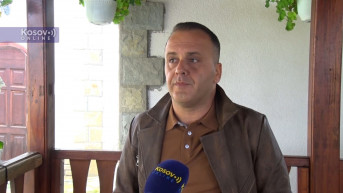
Historian Aleksandar Gudzic stated that the recent labeling of Serbian churches and monasteries in Kosovo as Albanian on Google Maps in the Albanian language is not the first instance of appropriating Serbian cultural heritage by the Albanian majority in Kosovo, but rather part of an ongoing process.
He explained that this process has a long prehistory:
“We are witnessing historical revisionism—a recycling of history. Kosovo’s institutions need a reworked, repackaged past. For the political and intellectual elites of Kosovo Albanians, rewriting history is essential to justify the rebellion of the 1990s, the expulsion of 250,000 Serbs in 1999 and 2000, and the destruction of over 150 churches and monasteries between 1999 and 2004,” Gudzic told Kosovo Online.
According to him, historical revisionism in Kosovo rests on four pillars:
“The first is the Roman Catholic identity of Kosovo Albanians; the second, their Illyrian–Dardanian identity; the third, the narrative of the Albanians as exclusive victims; and the fourth, the idea of a so-called Orthodox identity of Kosovo Albanians. These four pillars share the same premise—that Albanians are the indigenous population here, that the Serbs migrated to these territories in the 12th century, subjugated the Albanians, destroyed their churches, and built their own churches and monasteries on those foundations. This historical construction, built upon those four pillars, serves the political and intellectual elites of Kosovo Albanians as a way to justify what they did in 1999 and 2000,” Gudzic explained.
He emphasized that serious scholarship rejects such historical fabrications and revisionism, noting that numerous academic textbooks and publications have already disproven these pseudoscientific theories promoted by Kosovo’s political and intellectual elites.
However, Gudzic expressed skepticism that appeals to historical truth will have any practical impact:
“The intention of Kosovo’s political and intellectual elites is to persist with their own narrative, regardless of what scholars say. I am afraid this will continue in the future. The ultimate goal of Kosovo Albanians is to take over Serbian churches and monasteries—regardless of what official science or historical evidence says,” the historian stressed.
Referring to the recent appeal by Serbia’s Minister of Culture, Nikola Selakovic, to UNESCO after Serbian cultural heritage was falsely labeled as Albanian on Google Maps, Gudzic said that for UNESCO the matter is clear:
“For UNESCO, Serbian churches and monasteries are part of Serbia’s cultural heritage. Kosovo is not a member of UNESCO, and on that point, everything is perfectly clear,” he concluded.


0 comments