
Gudzic: Kosovo seeks to promote peace globally but cannot ensure the peaceful return of expelled Serbs

Historian Aleksandar Gudzic assessed Kosovo’s decision to send members of the Kosovo Security Force (KSF) to a peacekeeping mission as a paradox, emphasizing that Pristina aspires to promote peace worldwide, yet for more than two and a half decades has been unable to ensure the safe and peaceful return of expelled Serbs. Zijad Becirovic, Director of the International Institute IFIMES, stresses that KSF participation in such a mission would also violate international law.
“We are living in a Kosovo paradox, where on the one hand we have Kosovo seeking to be part of peace initiatives, and on the other hand we have several hundred thousand Serbs who were expelled in 1999, who have not returned, and for whom the authorities in Pristina have been unable to secure a safe and peaceful return, yet they wish to spread peace elsewhere in parts of the world affected by war,” Gudzic told Euronews Serbia.
He adds that the latest decision by the authorities in Pristina is, in fact, nothing more than a marketing move and an attempt by the current authorities and political elites in power to draw the attention of the current administration in Washington.
“The question is, even if a certain number of KSF members were to go to the Middle East, how many would that actually be, and what would be their real impact and contribution to the peace process,” Gudzic stated.
Ljeart Hodža, editor of ATV, believes that Kosovo should align its foreign policy with that of the United States.
“If a new international body is created in which Kosovo is a member from the outset and is treated equally with all other states, in strictly pragmatic political terms, that would be a good and logical move. As for the KSF and engagement in Gaza, I believe many details need to be clarified, but we all know that they have previously participated in certain international missions, mostly with the Iowa National Guard, a U.S. state entity, and there were no major problems in that regard,” he said.
Zijad Becirovic, Director of the International Institute IFIMES, emphasizes that the potential deployment of soldiers from Kosovo to Gaza “raises a series of complex political, legal, and security issues that go beyond the operational dimension and must be viewed within the broader context of regional and global relations.”
He particularly underscores that Pristina remains under the permanent international security framework of KFOR, a NATO mission, and that any engagement of the KSF outside the territory of Kosovo would have a strong symbolic and political effect. This is especially significant, he explains, given that Kosovo’s status is still not universally recognized, including opposition from Serbia.
Osmani’s Attempt to Secure a Mandate
The IFIMES Director believes that the idea of engaging the KSF is partly an attempt by outgoing President Vjosa Osmani to secure another mandate.
He stated that Osmani “has attempted to draw closer to American officials, including President Trump and others, in order to obtain support for her re-election.”
However, Becirovic expresses doubt that the Self-Determination Movement and Prime Minister Kurti will support her re-election, citing what he describes as her non-inclusive governance and discrimination against certain communities.
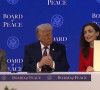
According to Becirovic, her accession to the Board for Peace occurred without government consent and has yet to be confirmed by parliament, making the matter highly open.
An Ad Hoc, Quasi-Body
Becirovic explains that the issue is not limited to Kosovo but also concerns the legitimacy of the Board for Peace itself.
“There is the United Nations system, there is the Security Council, and under the United Nations Charter, the Security Council is the only body authorized to deploy legal peacekeeping forces anywhere, including on the territory of Gaza,” Becirovic stated firmly.
He describes the Board for Peace as an “ad hoc, quasi-body” attempting to establish a parallel to the Security Council. The fact that the European Union attended the Board for Peace meeting only as an observer supports the view that this initiative runs counter to international law.
KSF Participation Violates International Law
Becirovic emphasizes that international law is of paramount importance, especially for small and medium-sized states. Although Serbia has, in some ways, been “a victim of that international law,” abandoning it would represent “a debacle for any country, in other words, a catastrophe.”
He also recalls that Pristina does not have an army in the full sense of the term, and that its formation would require a two-thirds majority of votes from minority communities, which is currently not the case. Therefore, Becirovic argues, KSF participation in such a mission would violate international law, a position also warned of by numerous experts and institutions. He particularly criticizes the idea of President Trump being elected as lifetime president of the Board for Peace, stating that such lifetime mandates “remind us of distant times associated with totalitarian regimes.”
The role of the Board for Peace in inviting the KSF is interpreted as an attempt to create the perception that this body holds greater authority than the United Nations. However, Becirovic believes this attempt will fail. He warns that sending soldiers from Kosovo to Gaza without a clear United Nations mandate or a broader international coalition could be interpreted as unilateral alignment in an extremely sensitive Middle Eastern conflict. This, he concludes, “could have implications not only for Kosovo’s security, but also for the internal stability of Bosnia and Herzegovina, North Macedonia, and Serbia itself,” given the deep divisions within these societies regarding perceptions of Middle Eastern crises.
Becirovic ultimately stresses that the Balkans must not become a “reflex zone of global conflicts,” as the region remains burdened by unresolved issues from the 1990s and sensitive interethnic relations.
The Board for Peace has also been addressed on several occasions by Kosovo Online, whose interlocutors assessed that it will not be able to replace the United Nations, but rather represents Trump’s attempt to “create his own world,” as he has no intention of returning to the framework of international law.
Analysts speaking to Kosovo Online also commented on Albin Kurti’s restraint, assessing that it may either reflect an attempt to minimize Osmani’s merits ahead of the vote for the President of Kosovo or a tactic aimed at avoiding friction with Europe.


0 comments