
Gudzic: A quarter century after the bombing – the Serbs in Kosovo the most isolated ethnic group in Europe
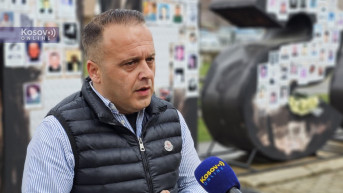
A quarter of a century after the NATO bombing of the Federal Republic of Yugoslavia, Kosovo is a shell without substance, and the Serbs in Kosovo are the most isolated ethnic group in Europe, historian Aleksandar Gudzic says for Kosovo Online.
Although he recalls, that the pretext for the bombing of the FR Yugoslavia, according to the assessments of the then representatives of the political elite of Western democratic countries, was the violation of human rights and the prevention of a humanitarian catastrophe, he emphasizes that afterward an - "instant state" was established, in which criminal structures were incorporated into the systems of power.
"Today, 25 years after the bombing, Kosovo is an area of disappointed expectations where more than 70 percent of young Albanians from Kosovo want to leave. Kosovo is an instant state, a shell without substance," Gudzic points out.
He emphasizes that after the bombing, Serbs became the most isolated ethnic group in Europe, whose rights are constantly violated.
"The outcome of introducing democracy through bombs in 1999 is 236,000 expelled Serbs, the majority of whom have not returned, and the return process is at the level of statistical error. Today, the Serbs are discriminated against and one of the most endangered ethnic groups in Europe," Gudzic said.
He notes that even the Albanian nation, once experiencing the largest demographic growth in Europe at the end of the 20th century, is now in numerical decline, which is why he fears that Kosovo will ultimately become a "no man's land" where no one will remain.
"The grim picture of Kosovo is perhaps best represented by empty houses in Albanian villages, or fields on the road from Gracanica to Prizren that no one cultivates. There is no life there, no people. When you travel through Drenica, which is a symbol of Albanian nationalism, you expect a place full of life, but there are no cars to pass by, no people, no children... Then you realize that this is a space that is emptying, that Kosovo is an area of disappointed expectations, and that all the promises made by representatives of Western democracy in 1999 and 2000 were actually false. That's why people are leaving, both Serbs and Albanians," Gudzic concluded.


comments