
Schifanelli: Intervention in FR Yugoslavia showed that NATO is an instrument manipulated by leading member states
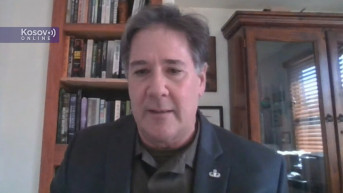
Former member of the US Special Forces and member of the OSCE Verification Mission in Kosovo in 1998 and 1999, Marc Schifanelli, assesses for Kosovo Online that the NATO intervention in FR Yugoslavia 25 years ago showed that this Alliance is fundamentally a political organization and a tool manipulated by its most powerful members.
"The bombing of former FR Yugoslavia showed that NATO is, at its core, a political organization and a tool that can be manipulated and abused by its strongest members, and as such is susceptible to political 'groupthink' and inevitable mistakes if used for anything other than strictly defensive deterrent purposes," Schifanelli says.
He notes that NATO continues to make these mistakes today.
"Look at today's threats as NATO, without logical reason, attempts to increase its presence to the threshold of Russia. What is the point, except for risking the very real possibility of escalating conflict," Schifanelli emphasizes.
As a member of the OSCE Verification Mission, Schifanelli was in Kosovo in 1998 and 1999. He and other members of this mission left Kosovo a few days before the bombing.
He emphasizes that it was clear to all observers that the war would not last just a few days, as the US and NATO officials were announcing.
"Before the NATO bombing began, I was in Zagreb watching the news. Over and over again, they aired military experts saying that the NATO bombing would be very effective because President Milosevic needed to be bombed for a few days and then he would capitulate, and NATO troops would enter. They did it in Bosnia. So, it was supposed to be a few days of bombing to save credibility with the Serbs. But from the beginning, I knew that Kosovo was not Bosnia and that it was a completely different scenario. From 30,000 feet in the air, you can't see what's happening on the ground. And I knew that the 'few days' narrative wouldn't fly. And of course, 76-77 days later, the world was still watching, and Yugoslavia had not capitulated," Schifanelli says.
He explains that the comparisons between Bosnia and Kosovo at the time were not realistic for several reasons.
He points out that the fundamental difference is that Bosnia declared independence from the then-SFRY in 1992.
"I also think that many criticisms in Serbia during the Bosnian conflict were that Milosevic did not do enough to help the Bosnian Serbs. Kosovo was different because the Serbs considered it the 'cradle of Serbia' and the Serbian faith, right? Kosovo was never an independent state or nation, although, under Tito, Kosovars were given some autonomy in local affairs. By February 1999, with the deployment of Yugoslav forces along the northern border of Kosovo, it was clear that if NATO attacked, the Yugoslav Army would move into Kosovo to clear out the KLA," Schifanelli says.
Western officials shortly after the start of the bombing of FR Yugoslavia, or NATO's "Operation Allied Force," publicly presented the narrative that this was being done because there was solid evidence that Yugoslav security forces had planned and initiated "Operation Horseshoe," which aimed at ethnic cleansing of Albanians.
This information was first disseminated by Bulgaria, and on April 7, 1999, German Defense Minister Rudolf Scharping announced it to the media.
Schifanelli says it was a pretext, an excuse for bombing.
"The events unfolded much differently than portrayed. After the bombing began, the Bill Clinton administration said it had to be done because 'Operation Horseshoe' had started. But that wasn't the reason. 'Operation Horseshoe' was a setup because NATO was determined to bomb. So, it was a pretext. As an intelligence analyst and soldier, I could connect the dots," Schifanelli says.
He argues that the claim about the existence of this operation was either a "bold lie" or complete incompetence on the part of the administration of then-US President Bill Clinton.
"Operation Horseshoe, as far as I could see, was necessary to deter NATO from the decision to bomb, but also for Serbia to retain Kosovo by defeating the KLA through a military operation. It was not indicative of ethnic cleansing," Schifanelli assesses.
He claims that the humanitarian catastrophe in Kosovo occurred only after the start of NATO bombing.
"Look at things just from a logical point of view. Before NATO started bombing, there weren't 800,000 refugees pouring out of Kosovo. The people who left as refugees after the bombing started, remember, were Kosovo Albanian Muslims, Kosovo Albanian Catholics, Serbs, Roma people, and others. Nobody felt safe and with good reason. When you read the official reports that the OSCE recorded in refugee camps, you begin to see that while killings and police abuse were happening, the Yugoslav Army and police units were also trying to provide security for everyone except those who were in the KLA. NATO planes couldn't stop the fighting between the Yugoslav Army, Ministry of Interior, and the KLA or between communities and citizens attacking their neighbors or defending themselves," Schifanelli says.
Therefore, NATO found itself in an unenviable situation because it ran out of targets.
"The best it could hope for was to continue hitting targets in Belgrade, Podgorica, and other cities to force capitulation. This could not have helped anyone in Kosovo to avoid violence. Moreover, NATO planes bombed a train carrying Kosovo Albanians who were trying to flee Kosovo with their women and children. A train carrying Bulgarian and Greek civilians trying to leave Yugoslavia was also hit. Finally, they ran out of targets," Schifanelli says.
He explains that some events from 1999 are now studied in US military academies, such as citizens' protests on bridges.
"People who came out to defend the last bridge over the Danube by having a party on it and they did save it. Now, that event is an example of target risk analysis in US military textbooks," Schifanelli says.
As the author of the recently published book "Confirmed - on Assignment with the Kosovo Verification Mission," when asked whether the Yugoslav Army outsmarted NATO in 1999, he says that Yugoslav generals made rational decisions, but NATO outsmarted itself.
"I think NATO outsmarted itself. That is, I think General Clark and others believed that Milosevic would capitulate after a few days," Schifanelli assesses.
He reminds that the Yugoslav Army had several weeks to prepare for war because then-US Secretary of State Madeleine Albright had already announced the possibility of bombing after the first failed negotiations in Rambouillet in February 1999.
"At the first meeting in Rambouillet, when Madeleine Albright said - this was scary, negotiations had failed, and we would bomb Yugoslavia very soon. Of course, that didn't happen; it was another six weeks or more. And then the Yugoslav Army came out of the garrisons and began preparing for war in Kosovo against the KLA. It was a very rational decision because they moved units and tanks. They didn't enter Kosovo but surrounded the borders, thus not violating the Milosevic-Holbrooke plan, and prepared for war. It was a completely rational decision and operation to do something like that. They knew they would have to fight both the KLA on the ground and NATO in the air simultaneously," Schifanelli concludes.

comments