
Gulic: The establishment of the Institute for War Crimes aims solely to prove the Pristina version of the war in Kosovo
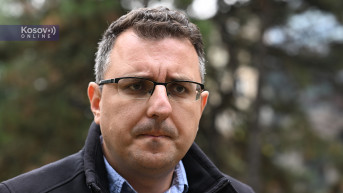
Milan Gulic, a senior research associate at the Institute for Contemporary History in Belgrade, believes that the newly established Institute for War Crimes in Pristina fundamentally aims not to genuinely confront the past in Kosovo but rather to politically establish the "Kosovo version of the war" with Serbia, to relativize the trials before the Specialist Chambers in Kosovo that concern former leaders of the Kosovo Liberation Army (KLA), and to "institutionalize" intimidation of Serbs, ultimately concluding the process of ethnic cleansing.
"After every war, and unquestionably in Kosovo and Metohija, there are many unresolved issues. On the one hand, you have the dead, missing, wounded, disabled, displaced, destroyed villages, confiscated property, etc. Any attempt to resolve all these outstanding issues would be commendable. However, the establishment of the Institute in Pristina, according to all announcements from the provisional institutions, does not seem to be a desire to shed light on the past better," Gulic says for Kosovo Online.
He explains that the establishment of such an institution seems more like a "political goal" to institutionalize the Pristina or Kosovo version of the conflict with Serbia in 1998 and 1999, however, he says that he is not entirely certain whether the institute is intended to have a scientific character or is conceived as a documentation center.
"According to what someone from the Pristina authorities said about the establishment, it probably is just a political-type institution that does not aim to truly confront the past because facing the past means analyzing even those things that do not favor us, yet we need to examine difficult events objectively. It was said here that this is an institution that should encourage the Pristina version of the war and talk about crimes committed by Serbia. Not only that, but the term 'genocide' is also used, which has no basis in reality," Gulic emphasizes, adding that the establishment of such an institution seems to serve daily politics in Kosovo but at the same time has a clear intention to relativize the trials of former KLA commanders in The Hague, despite the fact that, as he points out, the work of the Specialist Chambers in Kosovo "insufficiently sharpens the crimes committed by the Albanian side against civilians and members of the police and state administration in Kosovo during the terrorist activities of the KLA."
"As inadequate as it may be to the crimes committed, it is still a story about the crimes committed by the Albanian side, and on the one hand, perhaps this is an attempt to neutralize a little the stories about the crimes committed by the Albanian side," the historian notes.
Speaking about trials in absentia, Gulic points out that the Albanian judiciary and police in Kosovo are already quite active in intimidating not only people who have remained in Kosovo, not only returnees and potential returnees, but also those who simply go to their ancestral lands to visit homes and ancestral graves.
"This is an act that could significantly instill fear, although the police and judiciary have been doing this so far, and there have been arrests of people for invented war crimes, for participating in a war that did not happen or did not happen as described in the indictment or some media. Most importantly, it seems to me that Kosovo, in a way, is following the example of Croatia," he stated.
He reminds that Croatia, through indictments after the 1995 war and unexpected arrests, stimulated a policy to prevent the return and not only the return but the departure of people to their homelands.
"It seems to me that it is again about following the example of Croatia, which Pristina literally implements. The policy of arresting people that exists even now can, in this way, gain an institutional framework and intensify even more, scaring the few Serbs even more, and those who go from central Serbia to the southern province to be hindered in doing so. That is a sure path to complete ethnic cleansing of Kosovo and Metohija, and I would say that this process is pretty much at its end," Gulic concluded.



0 comments