
Gulic: Resolution on Jasenovac is an unfinished document, a result of compromise
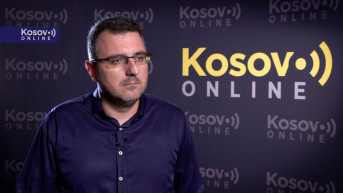
Research associate at the Institute of Contemporary History, Milan Gulic, believes that the Montenegrin Resolution on Jasenovac is a result of compromise and an "unfinished document" that is vague in key aspects and relativizes the crimes committed in the Independent State of Croatia, and he says that it unnecessarily equates Jasenovac with Srebrenica.
"Although we can say that the resolution has good intentions, it is rather, I would say, unfinished. Many things were overlooked in these compromises. Firstly, it effectively equates Jasenovac with Srebrenica, which is not justifiable in any way. Secondly, the resolution avoids mentioning the Independent State of Croatia and singles out Jasenovac as a specific case. Jasenovac was not a specific case; it was part of a systematic state policy of crime and genocide and was just one of about 30 camps in the Independent State of Croatia complex, and only one part of the genocidal policy that the Ustasha regime in Zagreb was implementing at that time," Gulic told Kosovo Online.
He explains that resolutions are never an expert matter but a political one, reflecting internal and international relations.
He believes that the Resolution on Jasenovac "misses the point."
"In that sense, the resolution represents an unfinished document. The inclusion of the Dachau and Mauthausen camps in the resolution is a complete relativization of the scale of crimes in Jasenovac. Even though people from this region suffered in those camps, these camps cannot be equated with Jasenovac. Therefore, due to so many compromises, there has been significant turmoil both within Montenegro and in regional relations, and it simply sends the message that the politics of compromise and retreat cannot always be conducted in such a manner," Gulic states.
He adds that this resolution is primarily intended for internal use in Montenegro.
"It is primarily for internal use. It is meant to preserve the ruling coalition from the standpoint of Serbian or pro-Serbian parties, which took a serious blow when Montenegro voted for the adoption of the Resolution on Srebrenica in the UN General Assembly. Therefore, this resolution should be viewed primarily in the context of political relations in Montenegro. However, it often happens that matters concerning the internal affairs of one state reflect on international relations, and that has happened this time as well," Gulic emphasizes.



0 comments