
Zivkovic: Reactions to the Resolution on Jasenovac exposed the hypocrisy of interpretations for Srebrenica
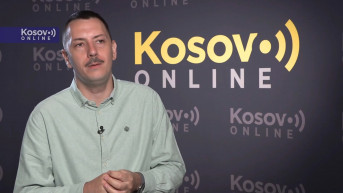
Historian Bogdan Zivkovic assesses that the reactions in the region, as well as within the EU, to Montenegro's Resolution on Jasenovac have unveiled all the hypocrisy of the interpretations of the adoption of a nearly identical document on Srebrenica in the UN.
"Regional centers of power convinced the Serbian public, when the Resolution on Srebrenica was adopted, that this resolution did not imply collective responsibility. And now, when the Resolution on the genocide in Jasenovac, Dachau, and Mauthausen was adopted, which is very similar in text to the Resolution on Srebrenica, stating that there is no collective guilt, the Croats now feel collectively guilty. This shows that all the justifications for the Resolution on the genocide in Srebrenica were hypocritical. Thus, indeed, resolutions of this kind imply collective guilt," Zivkovic told Kosovo Online.
He explains that another key regional significance of the Montenegrin resolution is that it breaks the "Story of Serbs as the exclusive criminals in the Balkans."
"I think this resolution is significant at the regional level because it breaks that narrative of Serbs as the exclusive criminals in all the traumatic parts of Balkan history. It shows that Serbs were victims and that sometimes Serbs were much greater victims than other nations. In this regard, I think it is very fruitful and, in some way, reveals and demystifies everything we heard a month ago during the voting at the United Nations," Zivkovic emphasizes.
He adds that the Resolution on Jasenovac is the result of political bargaining within Montenegro.
"The Resolution on the genocide in Jasenovac, Dachau, and Mauthausen arose in a specific daily-political context. It is a response to Montenegro's decision to vote for the Resolution on the genocide in Srebrenica in the UN. Since the government of Milojko Spajic depends on Serbian parties and Serbs in Montenegro, Spajic felt the need to make a counter-concession to Serbs in Montenegro by voting for this resolution, to cover up the fact that he voted for the Resolution on the genocide in Srebrenica. In this sense, one could say it is just political bargaining. And in some way, it is. It is Spajic's attempt to appease these contradictory aspirations. On one hand, there is the need to gain the support of the US, and on the other hand, there is the need to have the support of Serbs in Montenegro, on whom his government depends. Although this is in some way daily-political bargaining, I would not diminish its significance," Zivkovic says.
He assesses that the adoption of such a document is a change in Montenegro's decades-long policy, showing that Serbs in this country have gained certain political weight.
The adoption, he adds, can also be interpreted as the success of Andrija Mandic's policy for Serbs in Montenegro to participate in governance.
"This will mean many compromises, many painful compromises, such as the Resolution on Srebrenica, but it will mean that the voice of Serbs in the region and Montenegro can be heard. In this regard, of course, the reach of this resolution depends on how long Serbs will be in power. If one day Serbs are not in power in Montenegro, this resolution will be forgotten. But as long as they are in power, it means that Serbian suffering will be discussed in Montenegro, and that the negative myth of Serbs as the exclusive culprits for all the war and tragic history of the Balkans will be broken," Zivkovic believes.
Asked whether the resolution will lead to new divisions in the Western Balkans, the historian says that "the region always divides when the established equilibrium is disrupted."
"When someone tries to break that narrative, and when the status quo in the region is disrupted, when Serbs in some way raise their heads and talk about Serbian national interests and rights, that equilibrium is disturbed," Zivkovic emphasizes.
He is also convinced that further reactions from Croatia will solely depend on decisions within the EU.
"Croatia alone, without some broader support, will not be able to do much more. Certainly, in the short term, this will negatively affect relations between Croatia and Montenegro, but we will see in the long term how successful Croatia will be. Therefore, its main leverage in relations with Montenegro is the European path. I really doubt that if there is a readiness in Brussels to admit Montenegro into the EU, Croatia will be able to block it. So, I would not dramatize the significance of this resolution in the relations between Croatia and Montenegro," Zivkovic concludes.


0 comments