
Holstein: Belgrade-Pristina dialogue at an impasse, implementation of agreements a prerequisite for de-escalation
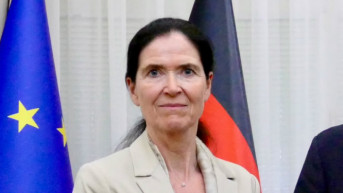
German Ambassador to Belgrade Anke Holstein said that the Belgrade-Pristina dialogue is at an impasse, stressing that, from Germany's perspective, the most important prerequisite for de-escalation and constructive talks is the full and credible implementation of existing agreements, above all the Brussels and Ohrid agreements, which both sides should work toward.
Holstein stressed that stability, reconciliation, and European integration are key.
“The common future of all countries in the Western Balkans is in the European Union. What is also important on that path, and this applies to everyone in the region, is an honest reckoning with one's own history and studying it, no matter how painful that may be. With one's gaze turned away from the rear-view mirror – it is easier to move forward,” Holstein stressed.
She emphasized that Germany and the EU will continue to consistently support the dialogue, call on both sides to fully and swiftly implement all agreements and closely monitor the implementation of the commitments, adding that only full implementation creates trust and provides security for all citizens, both in Kosovo and in Serbia, and enables progress on the path toward the European Union.
Holstein noted that, although she had worked in various positions in several countries in the region, after taking up her post in Belgrade she was positively surprised by how close and diverse relations between Serbia and Germany are, not only in the economy and development cooperation.
“This year, we are marking 75 years of diplomatic relations between our two countries. In the international context, there is a wide range of issues on which we hold the same position. People-to-people contacts are countless, and German is the second most popular foreign language in Serbia. And when things are literally burning, we are there for one another. This summer, firefighters from Serbia provided assistance to their colleagues in France and Spain, while firefighters from Germany and the EU came to Serbia's aid. This shows how close the ties between our two countries are, even though we do not take the same position on every issue,” Holstein said.
She also said that she had been unpleasantly surprised by the aforementioned intense focus on the rear-view mirror, not only in Serbia.
“Anyone who wants to move forward must keep their eyes on the road ahead! Admittedly, a careful driver always keeps an eye on what is happening in the rear-view mirror as well. Because honestly confronting one's own past is important, even though it takes time and leaves scars. This applies to every country. I witnessed this in Germany, so I know that it is possible, even though there are voices that would like to suppress quite a lot. It is important for every society to confront its own history, and that includes Serbia,” Holstein stressed.
She pointed out that Germany is by far Serbia's most important bilateral investor and development partner and that German companies employ around 80,000 people in Serbia, noting that bilateral trade between the two countries amounted to more than 10 billion euros in 2025, with a continuing upward trend.
“Since 2000, Germany has allocated more than 2.5 billion euros for economic transition, dual vocational education and training, good governance, social inclusion, energy, and environmental and climate protection. The results are visible throughout Serbia. In more than 40 cities and local governments, funds have been invested in energy and water supply and wastewater treatment systems, benefiting more than three million people,” she said.
Holstein added that Germany has also invested in the private sector through so-called “green” credit lines, investing more than 465 million euros, and that more than 85,000 beneficiaries of these loans have improved the energy efficiency of their businesses through green investments, which, as she stressed, is good for the environment and saves money.
“Thanks to our development cooperation, Serbia now has a legal institution of notaries public modeled on continental Europe. German organizations, such as the German Agency for International Cooperation (GIZ) and the German Foundation for International Legal Cooperation, supported this reform, starting with drafting the legislation and standardization and continuing through to high-quality professional training for the workforce on the ground,” the ambassador said.
She added that the notary system brings significant improvements for citizens of Serbia and for the economy, noting that notaries public have greatly relieved the courts, which had been overloaded with unresolved cases.
“Routine matters, such as buying real estate, notarizing public documents or probate proceedings, are not only handled more quickly and efficiently, but also transparently and with legal certainty through the application of clearly established quality standards. Through development cooperation, Germany has contributed to significantly improving people's lives in Serbia. This is the foundation on which we will continue to build. Our partnership is not made up only of figures, projects and successes, but also of human contacts,” she said.
Germany is one of Serbia's most important economic partners and its largest investor, and the German ambassador sees the greatest potential for further improvement, particularly when it comes to the introduction of new technologies, in deepening technological cooperation, above all in terms of the green transformation, renewable energy sources, energy efficiency and digitalization.
She stressed that, from an economic perspective, there are many synergies there and that over the years it has become clear that German know-how and production in Serbia together represent a guarantee of success.
Part of this cooperation involves strengthening support for Serbia's rapprochement with the European Union. The European integration process has been going on for a long time, and Holstein believes that it is already resulting in progress that is tangible for Serbian citizens.
“This includes the EU's pre-accession assistance to Serbia, visa-free travel, simplified payments within the SEPA area, and soon free roaming in the Western Balkans as well. On the other hand, through its Growth Plan and Reform Facility, the EU can provide Serbia with additional support, although this is conditional on concrete progress in implementing reforms,” Holstein said.
She stressed that, in addition, the Berlin Process contributes to the regional integration of Western Balkan states and, consequently, to their European integration as well.
“We would also like things to move faster. We have submitted proposals to the European Commission on how additional momentum can be given to the European integration process of all candidates, but this process is conditioned by the results achieved and depends on immediate progress in key areas such as democracy, the rule of law, judicial independence, the fight against corruption and organized crime, as well as the protection of media freedom,” the German ambassador said.
She stressed that they are closely following the upcoming elections, ensuring that they are free and fair, and that the decisive factor is a clearly expressed political will to put these urgently needed reforms into practice, firmly and consistently.


0 comments