
Hoxha: Indictments for war crimes in absentia are a novelty for the Kosovo judiciary
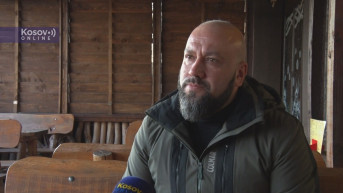
Indictments and the first trials for war crimes in absentia are a novelty for the Kosovo judiciary and could contribute to reconciliation, according to the lawyer from Pristina, Asdren Hoxha.
Hoxha told Kosovo Online that it was still difficult to predict the 'fate' of these cases because they involved complicated and challenging-to-prove processes.
"Especially considering that a considerable amount of time has passed since the alleged commission of these criminal acts, it's now been 25 years. We'll see how it goes; it's something new for the Kosovo judiciary", Hoxha says.
Hoxha recalls that only since February 18 of this year, with the amended criminal law, Kosovo has allowed trials in absentia.
"Generally, as a lawyer, I am not a supporter of trials in absentia because I advocate for the accused to defend themselves and have proper representation. In absentia, I have serious doubts", Hoxha says.
He points out that war crimes trials have been conducted in the region so far, and the outcomes depended on the collaboration of prosecutors.
"We have the Special Court in Belgrade that handled this type of criminal cases. We have courts in Bosnia, and ongoing trials in Croatia... But it varies from case to case, from one instance to another. Some other former Yugoslav states cooperate better in this regard. There was recently a case in Croatia against a military official from Serbia where witnesses were heard at the court in Belgrade. So, there is absolute cooperation between Croatia and Serbia, which is not the case between Serbia and Kosovo, making it very challenging in these cases", Hoxha emphasizes.
Hoxha dismisses the possibility that these are "mono-national indictments" and that it is an attempt by Pristina to create a counterpart to the Specialized Chambers of Kosovo based in The Hague.
"It depends on how one sees it. Perhaps the Serbs and Serbia can view it as some counterbalance to the Specialized Chambers in The Hague, but I don't think so. I believe that the prosecution is an institution to which citizens turn through the police. Terrible crimes occurred during 1998 and 1999 that must have consequences. Based on these statements and other material evidence, indictments have been issued, and it is the right, mandate, and legal right of Kosovo institutions to resolve this and bring justice to the victims". he emphasizes.
As he says, Kosovo does not need to confront its past because it involves the "sad Serbian past".
"These are only Kosovo victims, not the accused. Kosovo is not just facing itself to resolve certain matters, but it is trying to bring justice to the victims who have been waiting for 25 years. I think these proceedings can contribute to reconciliation because without justice, there is no reconciliation, and these victims seek justice, and we must see things from their perspective. I am always in favor of procedures that bring justice in every case", Hoxha says.
Although Special Prosecutor Drita Hajdari stated that a significant problem was that the accused for war crimes were not in Kosovo but in Serbia, Hoxha says that does not imply that the indictments are "mono-national".
"I couldn't say it's mono-national. Among those accused of war crimes, there are members of other nationalities. But these are war crimes committed by those who were, so to speak, 'on the Serbian side'. Now, whether they are Albanians, Roma people, Bosniaks, Turks, Serbs, or Montenegrins, that is less important, but they are on that side and accused of committing those alleged war crimes. Is it a problem, as the prosecutor mentioned, that they are mostly in Serbia or Montenegro and hiding there? It could be or not, especially after the amendments, and modifications of the new criminal procedure law for trials in absentia for war crimes. Especially after February 18 when the new criminal procedure law came into effect, allowing trials in absentia, some of them have already started, the initial discussion has taken place, and now it is crucial to appoint a lawyer ex officio if there is no authorization from the accused, and these processes will proceed", Hoxha says.
Hoxha says that when it comes to crimes of the "other side" during the conflict in 1998 and 1999, to his knowledge, there was only one legal process conducted before the Basic Court in Prizren, and now it is at the Court of Appeals, awaiting the issuance of a final verdict.
"All other cases have been processed by the Specialized Chambers in The Hague. Based on the mandate of these Specialized Chambers, they could take over cases that had started in our courts, as well as cases that had not started. They did not take over this case", Hoxha states.

0 comments