
Trifunovic: Since the '90s, war crimes in the Balkans have always been a political issue
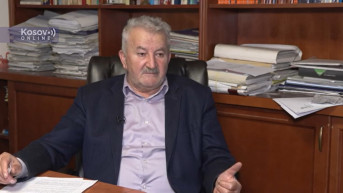
Commenting on the information from the Special Prosecutor's Office of Kosovo that 33 indictments have been issued against 89 individuals for war crimes, lawyer and former president of the Military Court in Belgrade, Djordje Trifunovic, notes that the majority of these cases are "inherited" from the international community, but also that in the Balkans, the issue of war crimes has always been a political, not a legal matter.
"Since the '90s until today, the question of war crimes in our region has always been a political issue. There has never been serious neutrality or objectivity, where each side tries to conceal its crimes while prosecuting the other. This is still happening today, regarding Bosnia and Herzegovina, Croatia, and now Kosovo. There's nothing new happening," Trifunovic says, adding that handing over war crimes cases to Pristina by the international community was also a political decision in support of the "factual recognition of Kosovo as an independent state."
Trifunovic expresses doubt about the fact that the Special Prosecutor's Office did not provide more detailed arguments for the 33 indictments, creating the impression that only Serbs are accused.
"The statement is superficial. It doesn't specify the events it refers to. It implies that they could be Serbs. If they had stated which events, apart from those already known, and if among those 89 individuals there were also Albanians or members of the KLA who committed undeniable crimes against Serbs, then such a statement would have more power. But the prosecutor's statement served political events in Kosovo, and it should be interpreted that way," Trifunovic says.
He finds it challenging to say whether the work of the Special Prosecutor's Office and the Special Court is a "counterbalance" to the Specialist Chambers in The Hague.
"I don't think it's a counterbalance; it's the same thing. However, these cases under Kosovo's jurisdiction are of lesser importance than the ones left to be concluded there. As for whether it's a separate part or part of the Hague Tribunal, I don't know because there was a court for Yugoslavia and Rwanda. Kosovo was part of Yugoslavia, so I don't see why there should be a separate court just for Kosovo," Trifunovic explains. He emphasizes that the necessity of discussing war crimes should not be disputed, but in these circumstances, it is not a legal but a political question.
"The necessity of discussing war crimes should not be disputed. Anyone who finds out about a war crime is obliged to act immediately. However, in our circumstances, it is not a legal but a political question. Until these relationships are normalized directly between Serbia and Kosovo, establishing any form of international legal cooperation, if it can be called that, these issues will always be subject to bargaining and political influence, and it will be challenging to arrive at a unified truth," Trifunovic warns.
According to him, the raised indictments will undoubtedly create obstacles for the accused Serbian citizens, and the entire war crimes narrative is being abused.
"Of course, there is an obstacle for Serbian citizens listed as accused to travel and move freely because it is possible that some countries will execute international orders and arrests in favor of Kosovo's judiciary. Of course, it needs to be examined to see what it is all about. However, it will take a long time for this to happen because this whole situation is being abused to put pressure on Serbian citizens. It's the same in other republics, such as Croatia and Bosnia and Herzegovina. Retired investigative judge Vojislav Medic used to go to Croatia for about ten years, building a house there, and then they arrested him," Trifunovic concludes.

0 comments