
IFIMES: Kosovo is becoming a powder keg; the formation of the CSM a path to normalization of relations
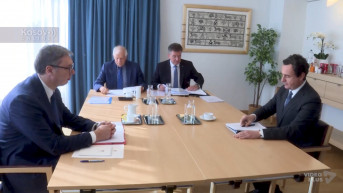
The International Institute for Middle East and Balkan Studies (IFIMES) points out in its analysis that the formation of the Community of Serb Municipalities is a path to the normalization of relations, while everything else represents the cementing of the existing unsustainable situation, and it adds that Kosovo is becoming a powder keg, which is why the President of Serbia Aleksandar Vucic's statement that Kosovo is shifting from a political to a security issue should be taken seriously.
"Fear of the formation of the CSM is exaggerated because it is still unknown how the Community of Serb-majority Municipalities would look like, which would be established by ten municipalities with a total population of no more than 100,000, and could hardly be a factor of destabilization. The competencies to be granted to the CSM would not significantly limit the functioning of the central authorities in Pristina. The central authorities would continue to have executive, legislative, and judicial authority in Kosovo," the IFIMES analysis states.
It is reminded that the establishment of the CSM is envisaged by the Brussels Agreement from 2013 so that it is constituted by a statute but guaranteed by Kosovo's laws, which require a two-thirds majority for any amendments.
The CSM can only be dissolved by a decision of member municipalities, it is added, and although it is established outside Kosovo's legal system, the CSM is part of Kosovo's constitutional order.
"Kosovo authorities refuse to implement the formation of the CSM, citing the decision of the Constitutional Court of Kosovo, which has identified 24 violations or provisions that are not in line with Kosovo's constitution," the analysis states.
As stated in the IFIMES analysis, analysts consider it acceptable for signatories of the agreement on the comprehensive, legally binding normalization of relations to be offered automatic EU membership.
"This is not impossible, given the precedent with Bulgaria and Romania, and Serbia is currently much more important for the EU in economic and political terms than Romania and Bulgaria were at the time. Can the EU 'swallow' that frog for the benefit of all? Analysts believe that one part of the international community in Kosovo is part of the problem, and Kosovo is becoming a powder keg, and therefore President of Serbia Aleksandar Vucic's statement that Kosovo is shifting from a political to a security issue should be taken seriously," it is added.
The analysis notes that Vucic and Kosovo Prime Minister Albin Kurti have met eight times so far but have not signed any agreements, including the Ohrid Agreement on the Normalization of Relations from February this year, which was reached only verbally.
Kosovo has already been under EU measures due to the rejection of the proposal for de-escalation, and these measures, as it is added, according to Prime Minister Kurti's admission, have caused damage of EUR 500 million.
It is stated that one part of the international community in Kosovo is the creator of numerous problems because they have put themselves in a "humiliating situation," insisting on holding local elections in four municipalities with a Serbian majority in northern Kosovo - Mitrovica, Zubin Potok, Zvecan, and Leposavic - in April 2023, at any cost.
"Local elections were held even though there were no conditions for holding elections, with a turnout of only 3.5 percent, and in predominantly Serbian areas, Albanians became mayors. Obviously, the international community has decided to repeat the mistakes of the past and further deepen the crisis," it is pointed out.
In addition to the Brussels Agreement, no one pays attention to the Washington Agreement signed in 2020, it is stated in the analysis, adding that, unlike the Ohrid Agreement, this agreement was signed.
"Therefore, there are expectations that the Ohrid Agreement will be forgotten, as a new sustainable solution needs to be found based on the 'win-win' model," it is stated.
Analysts believe that if normalization of relations between official Belgrade and Pristina is to be established, which will ensure lasting peace and long-term stability, Russia and China, in addition to the five EU and NATO countries that have not recognized Kosovo, should be included in the permanent solution, as without their involvement, the achieved normalization of relations can only be partial and temporary.
The international community insists that the parties in the dialogue should take their obligations arising from the Agreement on the Normalization of Relations seriously.
During the talks in Brussels on September 14th, Serbian President Aleksandar Vucic accepted a compromise proposal for the normalization of relations, allowing for the simultaneous implementation of political aspects of normalization and the formation of the CSM, while Kosovo Prime Minister Albin Kurti rejected the offered proposal, insisting on recognition by Serbia, which Vucic firmly rejected.



0 comments