
Drecun: Due to Pristina's positions, there is no possibility of reaching an agreement in Brussels
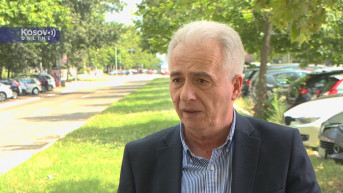
Milovan Drecun, President of the Parliamentary Committee for Kosovo and Metohija, says that, based on Pristina's positions regarding northern Kosovo, which they do not want to change, there is no possibility of reaching an agreement in today's meeting in Brussels that would lead to a de-escalation of the situation, as reported by RTV.
Drecun stated that during today's meeting between Serbian President Aleksandar Vucic and Kosovo Prime Minister Albin Kurti in Brussels, a very strong agreement with concrete steps to calm the situation in northern Kosovo should be reached, as well as on how to create conditions for Serbs and their political representatives to return to the institutions because, he emphasized, the reasons why Serbs had left the institutions had not been addressed.
He pointed out that what must be agreed upon, and implemented by Kurti, was the withdrawal of special police units from the north, not just from municipal buildings; mayors should also withdraw from municipal buildings; and elections should be organized in a manner acceptable to the Serbian people so that they could return to the four municipalities. As he added, the terrorizing of the Serbian people must stop, and Serbs who have been arrested should be released.
According to him, there is no readiness on Kurti's part to do this, nor is there a strong mechanism that the West would be willing to apply to compel him to do so.
"This is a game that Albin Kurti is playing to create the appearance of de-escalation. Is it possible to reach an agreement that would truly lead to de-escalation at today's meeting? I don't think so. Not because Belgrade is unwilling, but because Pristina has entirely different goals and does not want to lose its positions in the north," Drecun concluded, as reported by Tanjug.
According to him, everything that happens in Brussels is a process, and it is impossible to declare victory or defeat at a single meeting.
As he emphasized, Belgrade has a constructive approach, while Pristina has a different one that is quite destabilizing and leads only to something that is absolutely unacceptable for Belgrade, namely, Belgrade agreeing to Kosovo's membership in international organizations and establishing relations with Pristina based on the principles of respecting territorial integrity and sovereignty.
"It is known what Belgrade is seeking, but the only unknown for me is the behavior of the Western political powers. What will these Western political powers, embodied in Josep Borrell and Miroslav Lajcak, offer today at this meeting? Do they have a new proposal? Will they perhaps come up with new measures to threaten Pristina? We have seen recently that messages have been sent that if this opportunity is not seized, it is possible that some measures will be taken regarding visa liberalization. French President Emmanuel Macron mentioned this, and then the Germans denied it. So, the only unknown is whether they will come up with a concrete proposal," Drecun said.
He emphasizes that individual breakthroughs related to technical issues, although important for everyday life, cannot be characterized as a success of today's meeting, and if the political West has not come up with a solution, there is no possibility for progress.
Regarding Serbs in Kosovo, Drecun pointed out that their safety was constantly endangered, that the terror, especially against Serbs in the north, continued, that Serbs were still disenfranchised, and that Pristina's institutions still treated them as second-class citizens.
"The terror just won't stop. People are being arrested without any reason or guilt, their property is being confiscated, and there are threats of further escalation, especially in the north. Kosovo's military potential is increasing, and the police forces are very brutal, taking action against the Serbian people. The flow of food and everything else is being blocked, and they are attacking the educational and healthcare systems, as well as the social assistance provided by Serbia to Serbs in Kosovo. Simply put, the situation is so dire that it threatens to cause a pogrom of the Serbian people in terms of migration and departure because, under these conditions, Serbs can hardly see any prospects for survival," Drecun assessed.



0 comments