
IFIMES: There are no normal conditions for holding elections in the north of Kosovo
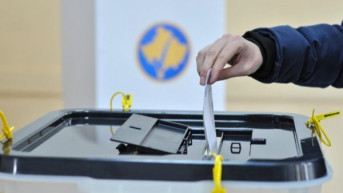
Whoever is elected in the upcoming elections in the north of Kosovo will not have real power because they will basically lack legitimacy, according to the analysis of the International Institute for Middle Eastern and Balkan Studies (IFIMES) and adds that because of this the electoral process does not make much sense and will not solve essential problems, such as the return of the Serbs to Kosovo's institutions, as well as the fact that there are currently no normal conditions for holding elections.
On the occasion of the extraordinary local elections in Kosovo, which will be held on April 23 in four municipalities with a Serb-majority population in the north of Kosovo, IFIMES analyzed the current political situation, "Permanent severing of ties between the Serbian community and the authorities in Pristina?" in which it states that the international community, by approving early elections, is deepening the existing crisis and perhaps permanently severing ties between the Serbian community and the authorities in Pristina.
It is recalled that extraordinary local elections in Kosovo would be held in four municipalities in the north of Kosovo with a Serb-majority population - North Mitrovica, Leposavic, Zubin Potok, and Zvecan, where mayors would be elected, while councilors would be elected for the assemblies of the municipalities of Leposavic and Zvecan.
It is added that the elections were originally supposed to be held on December 18, 2022, but due to the unfavorable security situation, they were eventually postponed to April 23, while the official election campaign lasted from April 4 to 21.
Stating that the largest party of Kosovo Serbs – the Serb List, which has the strong support of official Belgrade, did not apply for participation in the local elections with the explanation that their condition for returning to Kosovo institutions was not met, and that is, in addition to postponing the decision on vehicle re-registration, the formation of the Community Serb-majority Municipalities according to the Brussels Agreement of 2013 and the withdrawal of Special Forces of the Kosovo Police (ROSU) from the north of Kosovo, i.e. from Serbian areas, it is indicated that the Serb List, which was formed in 2013, won more than 90 percent in almost all Kosovo elections votes of voters from the ranks of the Serbian community.
It is also pointed out that the Central Election Commission of Kosovo (CEC) had decided to reduce the number of polling stations from 44 to only six, and it had also been adopted to open 13 alternative polling stations.
Negotiations between official Belgrade and Pristina in the past period, which resulted in a verbal agreement from Ohrid, did not resolve the issue of the return of Serbian representatives to Kosovo institutions, and the issue of holding extraordinary local elections for four municipalities in the north of Kosovo was not officially on the agenda.
It was expected that after the meeting in Ohrid, things regarding the elections in the north of Kosovo would be clearer, but also that the Serb List might change its decision and participate in them, which had not happened.
It is stated that, according to CEC data, two of the four municipalities in the north of Kosovo would have candidates for mayors, who had come from Serbian parties - Leposavic and Zvecan, and adds that in Leposavic, "the president of the minor Party of Kosovo Serbs (PKS)" applied for mayor, Aleksandar Jablanovic, who says that he "offers changes that are part of the 21st century".
Independent candidate Sladjana Pantovic, an opposition politician, who participated and was unnoticed in earlier election cycles, ran for mayor of Zvecan.
Both candidates from the Serbian community, it is said, belong to the Pristina pro-government bloc.
Candidates for the municipalities of North Mitrovica and Zubin Potok exclusively come from Albanian political parties.
The Self-Determination Movement of Albin Kurti and the Democratic Party of Kosovo (PDK) of Memlli Krasniqi have their candidates for mayor in all four municipalities with a Serb-majority population.
"Out of a total of 11 candidates from four political subjects, only two are from the ranks of the Serbian community. This will lead to the situation that in municipalities where the Serbs make up more than 96 percent of the local population, the heads of the municipalities will be ethnic Albanians with negligible turnout in the elections, which will revolve around a statistical error. North Mitrovica is the informal center of the political gathering of the Serbs in Kosovo, which after the extraordinary local elections would have an Albanian at the head of the municipality," the IFIMES analysis states.
It is added that the EU expressed its regret that the Serb List would not participate in the elections, which were the "cornerstone of democracy" and adds that it is questionable whether there are security conditions for holding the elections or whether the elections are held with high security risks.
"Unlike the situation in December last year, this time the international community supports the holding of elections in the north of Kosovo. The Quint countries (US, Great Britain, Germany, France, and Italy) announced that they 'regret' that the Serb List would not participate in the elections, inviting both parties to refrain from any violence that might disrupt the electoral process, and the competent authorities to 'act professionally'. The key question is what will happen after the local elections, because whoever is elected in the upcoming elections in the north of Kosovo will not have real power because they will basically not have legitimacy," the analysis stated.
It is indicated that the international community put itself in a rather "uncomfortable situation" because it had not wanted to ask the Kosovo authorities again to postpone the elections after the Kosovo authorities had already done so in December 2022 and they had expected that the Serb List would now come out to the elections based on the agreement reached in Ohrid.
"Obviously, the international community has decided to repeat the mistakes of the past and deepen the crisis", it is stated, and adds that it is obvious that what was agreed in Ohrid was not enough for the Serb List to justify its participation in the elections, because after all, Kosovo's Prime Minister Albin Kurti, after the meeting, did not come out and say "we will form the CSM".
On the contrary, he repeated, "that self-management cannot be the CSM".
Also, there was no progress when it comes to the withdrawal of Kosovo's Special Police units from the north, which are causing "unrest and fear" among the local Serbian population.
KFOR announced that the Kosovo Police would be in charge of security during the elections, but that the KFOR mission would monitor the situation.
They state that it is necessary to establish a moratorium on unilateral moves and the presence of Special Forces and point out that there are currently no conditions for holding extraordinary local elections under normal circumstances, without heightened tensions and the participation of the Serb-majority population.
If, on the other hand, the voting is held, as they add, the question arises as to what happens after April 23.
Analysts believe that there are no normal conditions for holding elections, tensions similar to those of last year can be expected, and that the situation after such local elections could be further complicated and contribute to the permanent severing of ties between the Serbian community and the Kosovo authorities.
Therefore, they believe that it is necessary to introduce a moratorium on the presence of Special Police units (ROSU) in the north of Kosovo or, as a compromise solution, ensure a 24-hour joint presence of EULEX members with Kosovo Special Police units at the established checkpoint after the Jarinje crossing and at the checkpoint near the Bistrica Bridge on the main road Mitrovica-Leposavic.
"Introduce a moratorium on unilateral moves and actions and postpone extraordinary elections until the conditions for holding them are met that is until a political agreement is reached within the Franco-German plan and dialogue between the official Belgrade and Pristina, which takes place through the EU. Kosovo Society must persist in seeking the much-needed social consensus and compromise," the analysis concludes.
0 comments