
Analysts: The elections in the north of Kosovo are not all about the normalization of relations; they should be postponed
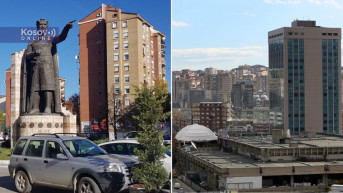
Veljko Odalovic and Dusan Janjic assessed that by insisting on holding local elections in the north of Kosovo, the authorities in Pristina wanted to postpone the implementation of the obligations they had undertaken, which increased the pressure on the Serbs, and Nexhmedin Spahiu said that these elections were not legitimate without the Serb List and that they should be postponed, RTV broadcasted.
The president of the Serbian Commission for Missing Persons, Veljko Odalovic, assessed that the authorities in Pristina were causing a crisis with incidents that led to anger and discontent among the Serbs and that the arrest of Dr. Todorovic was another drop in the bucket and the question was when it would overflow.
For Tanjug, he assessed that the arrest had been beyond common sense, and added that it had been a provocation in order to raise insecurity to a higher level.
He stated that the installation of Pristina's security forces in the northern Serbian municipalities had created enormous insecurity.
He said that the arrests and injuries of the Serbs proved that the provocations did not stop and that they were happening in the phase of intensifying the dialogue between Belgrade and Pristina in the search for a solution.
"Some solutions are unfavorable for Kurti, but if he thinks to avoid the obligations that have been taken, by continuing to do this and provoke the Serbs, it seems to me that he is wrong. The international community has sent a lot of strong and clear messages, that are a new quality, the messages have also arrived from the US, and now the matter is taking a much more serious form," he assessed.
Speaking about the elections in the northern Serbian municipalities, Odalovic assessed that Pristina did not want elections in which the Serbs would have legitimate representatives, and emphasized that the legitimate representatives of the Serbs were in the interest of the Albanians as well.
He assessed that the elections for Pristina would be legal, but they would not be legitimate.
He recalled the clear international messages after Brussels and Ohrid that the CSM had to be formed.
"Even if the elections take place, they will not produce any results; they will open up some new issues. I deeply believe that new elections must follow, but first, some things will have to be agreed upon through dialogue," he said.
Odalovi stated that the Serb List had the greatest trust of the Serbs and that others who wanted to participate in such elections directed by Pristina were there for themselves and Kurti.
He believes that Kurti would be the happiest if he could freeze the militarization of the north of Kosovo that he carried out, legalize the elections, and with the Serbs, who participated in them, create some kind of CSM.
Political analyst Dusan Janjic for Tanjug assessed that Albin Kurti had been encouraged by Germany and France to unilaterally schedule elections for mayors of Serbian municipalities.
He added that resolving the conflict required reaching an agreement on the conditions for the return of representatives of the Serbian community and ending the institutional and security vacuum.
He assessed that Kurti's policy of reciprocity was very narrow and said that the problem had to be solved by agreement with the return of the Serb representatives.
He believes that Pristina is now de facto obstructing all agreements on the Community of Serb-majority Municipalities by holding elections that will have to be held again.
Janjic pointed out the special importance of the issue of security in the vacuum in the north of Kosovo.
"In the North, you have never had so many special police officers and controls in Pristina in terms of numbers and kilometers, it is a very dangerous atmosphere," he said.
He said that normalization in Kosovo could not be expected if the Americans had lost the fight over that issue to Germany and France.
Janjic assessed that Kurti created a situation of division within the Serbian community through conflict play and a situation in which it was impossible to live without him.
"He plays the game to stay in the game, he imposes himself as a guarantee factor," he said.
He assessed that Kurti violated the Brussels agreements from 2013 and 2015, and that he might be able to delay the formation of the CSM by a few months.
"The key is that Belgrade does not abandon the talks, even though Pristina aims to irritate Belgrade. The agreement is not a Franco-German one, but ours and Kosovo's obligation," he said.
Political analyst Nexhedim Spahiu assessed that the municipal elections should be postponed because they were not legitimate without the participation of the Serb List.
He added that although the influence of the opposition parties in the Serbian community was strengthening, the Serb List was still the most powerful and that this should be respected.
He assessed that the elections in the north of Kosovo without the participation of the Serb List were a conflict situation, with unpredictable consequences.
"When we are on the way to the realization of the Franco-German plan, we should concentrate on it and ensure that it is implemented as agreed, without additional conflicts that could spoil it," he said.
He added that the decision to postpone the elections was up to the President of Kosovo and that she would do so if advised by the Americans.
Spahiu expects that the majority of the Serbs will not vote and added that Kurti might be encouraged by that, but there are still Serbs who will vote.
"It provokes the Serb List even more fiercely. The more Serbs come out, the greater the nervousness and the possibility of a conflict," he said.


0 comments