
Ivanov: Expect a change in Chapter 35 for Serbia; if the EU makes a concession, Pristina will also seek one

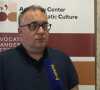
The formalization of the European Council's request for the European Commission to propose amendments to the criteria of negotiating Chapter 35 within the accession negotiations with Serbia, reflecting the obligations from the Brussels Agreement of February this year and its Ohrid Annex from the dialogue with Pristina, according to Helena Ivanov, a research fellow at the Henry Jackson Research Center, is not surprising, as she says, sine March 18, when the Ohrid Agreement was verbally accepted, the EU and the High Representative Josep Borrell has insisted that it is legally binding.
"They have insisted since March 18 that it is in line with the Vienna Convention that agreements that are orally accepted are legally binding, regardless of whether they are necessarily signed. In addition, the EU has been quite clear during every meeting between Belgrade and Pristina this year that the implementation of agreements, specifically from Brussels and Ohrid, will be a condition for both Serbia and Kosovo regarding the EU accession process. So this decision is consistent with the EU's general stance throughout the year. Accordingly, we should expect the European Commission to insist on its implementation, and this will be a step further in insisting that the implementation of the agreed-upon and the normalization of relations between Belgrade and Pristina be included as a key condition for the EU accession process", Ivanov said to Kosovo Online.
When asked if the letter in which the Government of Serbia had lodged a reservation against the EU declaration, demanding from Belgrade and Pristina to implement the agreements reached, including the Agreement on the path to normalizing relations and its annex, could influence the European Commission to exclude the dialogue agreements in full from Chapter 35, or that it did not include parts that are controversial for Serbia, primarily related to Kosovo's membership in the United Nations, Ivanov doubts that it can be an option.
"The EU's position is quite clear; their claim is: this is something that has been put on the table, you had the opportunity to discuss it, and this is an obligation that both Belgrade and Pristina verbally accepted, which is legally binding under the Vienna Convention. So, I don't see that there will be any major changes, regardless of the letter sent by the Government of Serbia, because the EU will insist that this is something that has already been accepted. If a concession were to be made regarding the contentious point about Kosovo's accession to international organizations, which also means the United Nations, then, I believe, Kosovo would also seek a concession for them. We can assume that it would be a question of forming the CSM, and therefore, I don't believe the EU would be willing to make any concessions in that regard. So, if the EU, conditionally speaking, fulfilled what Serbia wants, which is to remove the point about Kosovo's accession to international organizations, and if that were a 'new version', I believe Kosovo would then seek leniency for what is contentious for them", Ivanov says.
As she adds, the pressures on Belgrade and Pristina to resolve the normalization issue as soon as possible were very high this year, and she believes this issue is crucial for the EU because of its desire to achieve a significant diplomatic victory.
"That victory would be the resolution of relations between Belgrade and Pristina. Also, due to the entire geopolitical situation caused by the Russian invasion of Ukraine, there is a great fear that if the relations between Belgrade and Pristina are not normalized in the near future, this region may once again become a hotspot", Ivanov says.
Speaking about the perspective of the dialogue with Pristina if the European Commission amends Chapter 35 for Serbia, our interlocutor says that she is not optimistic about the dialogue, regardless of this specific situation. As she points out, neither Belgrade nor Pristina were entirely constructive in the negotiation process, and the EU was not a successful mediator.
"The EU often brings Belgrade and Pristina to the table, and agreements are reached in those rooms, but very little is implemented. Recently, we even have a pattern where after some negotiations that are supposedly presented as successful, there is an escalation, so I don't see that this will have any positive effect. Even if the agreements are included in Chapter 35, as long as Kosovo is not willing to fulfill its parts of the agreement, I believe Serbia will use it as an argument like 'Why should we fulfill it if Kosovo isn't'. There is no real willingness to resolve this; instead, there is a constant effort to achieve a small diplomatic gain after some round of negotiations, and there hasn't been enough emphasis on what is practically implemented afterward. I don't see that changing in the future", Ivanov says.
Regarding Serbia's integration into the EU, she says that the process has been going on for a very long time and is slow. The problem is not only the normalization of relations between Belgrade and Pristina but also the alignment of Serbia's foreign policy with the EU, including the imposition of sanctions on Russia.
"There are a significant number of obstacles, and the question is whether and how effectively these obstacles will be resolved and what that will practically mean for the EU accession process", Ivanov concludes.
comments