
Ivanov: If Kurti becomes prime minister again and doesn't change his policy, Kosovo will have trouble receiving funds from the Growth Plan
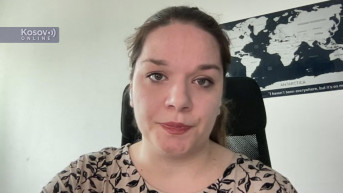
Helena Ivanov, a research associate at the Henry Jackson Research Center, told Kosovo Online that while the first payment from the European Growth Plan for Kosovo will not be conditioned on progress in the dialogue with Belgrade, future installments will not only be assessed based on implemented reforms but also on whether Kosovo's approach to the normalization process with Belgrade is constructive.
“This will greatly depend on who leads Kosovo’s government, as the EU imposed measures on Kosovo due to Albin Kurti’s unconstructive approach. If Albin Kurti were to become prime minister again and continued the same policy he pursued in his previous term, Kosovo would face difficulties in receiving funds from the Growth Plan. However, if he changes his approach or if someone else adopts a more constructive stance toward dialogue, we can expect Kosovo to receive its payments on time,” Ivanov stated.
Noting that the first EU payment has been delayed for all Western Balkan countries, Ivanov explained that while part of the responsibility lies with the EU – having initially promised to release the funds at the end of last year, now postponed to the first quarter of 2025 – the delay is also understandable given that this is a new plan, and the implementation of a new instrument by the EU likely led to setbacks.
Regarding Kosovo specifically, she emphasized that the key issue is when and how the parliament will be formed following the elections held on February 9.
"Despite his aspirations to achieve an absolute majority and form a government independently, Albin Kurti failed to do so in this election. The question remains how the parliament will be constituted, how the government will be formed, and who will be part of it. Until these internal matters are resolved, we will have to wait and see when the first payment will be received. Generally speaking, the delayed first installment is not conditional and, once ratified, should be received by every Western Balkan country. However, what is crucial for both Kosovo and Serbia is that all subsequent installments will be conditional – not only on the reforms expected of all Western Balkan countries but also on improving the normalization process," Ivanov explained.
When asked who will assess whether Kosovo is constructive in the dialogue, Ivanov stated that the final decision will formally be made by the EU Special Representative for the Dialogue, Peter Sorensen, and the EU High Representative for Foreign Policy, Kaja Kallas. However, she believes that, behind the scenes, all EU representatives involved in the normalization process will have a significant influence on the decision-making process.
"The question, however, is what the normalization process will look like now, as the EU is dealing with much larger and more complex issues than the Western Balkans. The election of Donald Trump as the next US president has complicated matters for the European Union. The outcome of Russia’s invasion of Ukraine and Trump’s complete exclusion of the EU from the negotiation process raises the question of how much capacity the EU will have to seriously and thoroughly engage with the situation in the Western Balkans, particularly the normalization process between Belgrade and Pristina," Ivanov pointed out.

0 comments