
Ivanov: Kosovo still on agenda after European elections, but EU enlargement uncertain

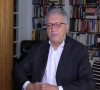
The European Parliament elections are a tectonic shift for Europe, as Helena Ivanov, a research associate at the Henry Jackson Research Center, evaluated for Kosovo Online, noting that this shift won't significantly impact the dialogue between Belgrade and Pristina, but the EU enlargement process might be sidelined.
“These elections are certainly a tectonic shift for Europe, in the sense that the performance of right-wing and far-right parties was unpredictably strong, to the extent that Macron felt the need to call for emergency parliamentary elections given his party’s performance compared to Le Pen’s party. So, I think we will definitely see a more right-leaning Europe because the fact that right-wing parties performed so well in these elections will undoubtedly influence how current governments, which might be closer to the center, behave to maintain their popularity among voters,” Ivanov stated.
On the other hand, she says, the three largest parties in the European Parliament remain the same as before, so despite the right-wing success, it is not an absolute victory in every sense.
“I believe we will see much of what we have seen so far, but certainly, this right-wing performance will not go unnoticed, and we will definitely feel its consequences,” she said.
Regarding the approach to the Western Balkans, she does not expect many changes concerning the normalization of relations between Serbia and Kosovo.
“Things are already established, the path is clear, and I believe expectations will remain the same, fundamentally based on both sides being expected to implement what was previously agreed. I think, in principle, everything will stay more or less as it was, meaning that pressure will continue on both sides to respect the Brussels Agreement signed over a decade ago. In this context, I hope there will be continued insistence on Kosovo fulfilling its obligation regarding the Community of Serb Municipalities, but I also think the last two meetings, one in Brussels and the other in Ohrid, will also be on the agenda,” Ivanov assessed.
However, she believes that one of the significant consequences for the Western Balkans might be related to EU accession and membership, as after such elections, she believes “the appetite for enlargement will be smaller than it has been so far.”
“Regarding EU enlargement and accession, I think the consequences will be similar for both Serbia and Kosovo, in the sense that the general appetite for enlargement will decrease, but on the other hand, the condition that relations between Belgrade and Pristina be normalized will remain a requirement for any substantive consideration of joining the EU,” she noted.
Ivanov sees the idea proposed by American professor and analyst Edward Joseph that the US should appoint a special envoy for Kosovo recognition as expected, given the current complicated global political scene.
“The Russian invasion of Ukraine on the one hand, the war in the Middle East on the other, the increasingly complicated situation within the European Union, and the strengthening of the right as we have seen from the European election results… I believe that in this context, the US genuinely wants to close the Western Balkans chapter, which is essentially the idea behind the envoy. A major problem in closing this chapter is the fact that not all EU countries have recognized Kosovo’s independence, complicating the idea of fully recognizing and treating Kosovo as independent. So, I believe the envoy’s function would be to try to persuade all those actors who haven’t recognized Kosovo to do so,” she explained.
However, she doubts that such an envoy would be effective.
“I doubt it, considering that most of the countries that haven’t recognized Kosovo, for example, Spain, haven’t done so not just because of their stance on Serbia or Kosovo but also due to their internal issues. Specifically, in the case of Spain, it would be Catalonia. So, I don’t see how such an envoy could persuade a country like Spain to recognize Kosovo, given the implications it would have on Spain’s internal politics in this particular case,” Ivanov concluded.


0 comments