
Ivanov: Szijjártó's statement on opening chapters with Serbia is political, EU has no desire to expand
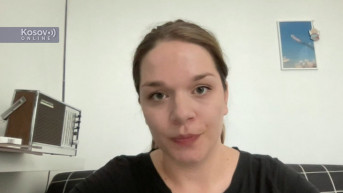
The Hungarian presidency of the EU Council will not significantly change the current EU policy towards Serbia, says Helena Ivanov, a research fellow at the Henry Jackson Society, for Kosovo Online. She evaluates that Péter Szijjártó's statement about opening chapters is more political, as the EU currently has no reason to desire expansion.
"We can certainly say that it is a good thing that Hungary will hold the presidency, and this will benefit Serbia, especially since Serbia may have slightly strained relations with some other EU countries compared to Hungary. However, on the other hand, I wouldn't attach too much significance to it, if for no other reason, then because of the way decisions within the EU are made, which is unanimously or at least by a majority," explains our interlocutor.
The Hungarian presidency of the EU Council will not significantly change the current EU policy towards Serbia, says Helena Ivanov, a research fellow at the Henry Jackson Society, for Kosovo Online. She evaluates that Péter Szijjártó's statement about opening chapters is more political, as the EU currently has no reason to desire expansion.
"We can certainly say that it is a good thing that Hungary will hold the presidency, and this will benefit Serbia, especially since Serbia may have slightly strained relations with some other EU countries compared to Hungary. However, on the other hand, I wouldn't attach too much significance to it, if for no other reason, then because of the way decisions within the EU are made, which is unanimously or at least by a majority," explains Ivanov.
She reminds us that Macron has clearly stated that now is not the time for expansion, and other countries have not shown a great appetite for it either.
"After the European Parliament elections, where the right had relatively positive results compared to some other options, I think the appetite for expansion has further decreased. So, despite Szijjártó's promises, I'm not overly optimistic that many chapters will open in the near future or that the Western Balkan countries will join the EU soon," she states.
Regarding the dialogue between Belgrade and Pristina, she believes that Hungary will address this issue because all negotiations on normalization occur under the EU's auspices, but the process will more or less remain as it is.
"That is, the EU will organize various meetings with varying degrees of success and will continue to insist that obligations accepted in earlier agreements be implemented. I believe they will continue to mention that different financial aids will be conditional on fulfilling the provisions from the agreements reached during normalization negotiations," Ivanov says.
The main question, she assesses, is how the EU can potentially compel Belgrade and Pristina to comply with what they have agreed to.
"It should be noted that more than ten years have passed since the signing of the Brussels Agreement, which is still not fulfilled, and we still do not have the Community of Serb Municipalities. So, it is questionable whether the EU will change anything in the coming months to persuade both sides to move from merely verbal agreements to actually implementing what they have agreed to verbally or, in some cases, signed more than ten years ago," concludes Ivanov.

comments