
Budapest between Belgrade and Pristina – How realistic is it that Hungary might withdraw its recognition of Kosovo?

Relations between Hungary and Serbia have been frequently described as the best in history for several years now. Despite having recognized Kosovo in 2008, Budapest has been a strong ally of Belgrade in the international arena regarding Serbia's interests in Kosovo in recent months. The possibility of Hungary withdrawing its recognition of Kosovo, however, is not entirely realistic, according to Kosovo Online's interlocutors, although not entirely ruled out. They consider this issue quite complex for Hungary as a member of NATO and the EU.
Hungary recognized Kosovo on March 19, 2008, and has an embassy in Pristina, currently headed by Bela Bozik. In 2015, Hungary voted for Kosovo's entry into UNESCO, although the majority of members rejected Kosovo's request. In 2018, Hungary abstained from voting on Kosovo's admission to Interpol. Hungarian lawmakers in April of this year voted against a recommendation for Kosovo's membership in the Council of Europe's Parliamentary Assembly, and last month, official Budapest was the only one against Kosovo becoming an associate member of the NATO Parliamentary Assembly. Hungary also voted against the UN General Assembly resolution on Srebrenica.
Last fall, when some EU member states advocated for sanctions against Serbia over the events in Banjska, Hungarian Prime Minister Viktor Orban called that idea "ridiculous" and "impossible."
"Serbs (in Kosovo) have been regularly subjected to provocations over the past two years. We must understand that Kosovo needs to behave differently and not provoke the Serbs," Orban said at the time, adding that "provocations lead to instability."
Because of all this, it is not surprising that foreign analysts conclude that Budapest favors Belgrade between Pristina and Belgrade. However, whether this is enough to revoke the decision to recognize Kosovo remains to be seen.
Former Serbian Ambassador to Hungary Rade Drobac told Kosovo Online that official Budapest is aware of the importance Serbia attaches to Kosovo and that if the opportunity arises, it will not hesitate to withdraw its recognition, but that it is not realistic to expect that at this time.
"For Hungary to withdraw its recognition of the so-called Kosovo, there will have to be, in my opinion, even more drastic changes in international circumstances, and such a decision should not be significantly detrimental to its relations with the Western bloc or jeopardize its membership primarily in the EU, but also in NATO. This could happen relatively quickly, but it may not, depending on further developments in international relations, the resolution of EU-US relations, and the conflict in Ukraine," Drobac said for Kosovo Online.
He added that the recent decisions of official Budapest indicate a clear policy of independence in decision-making on key international issues.
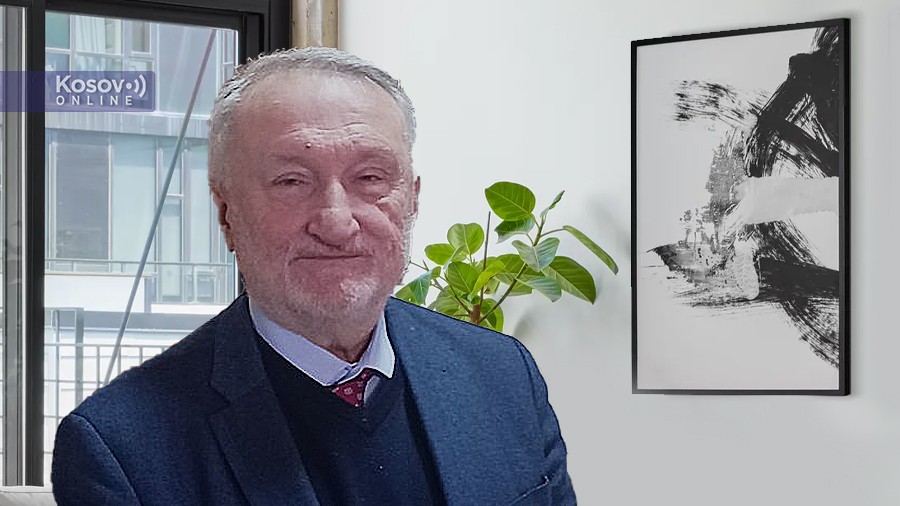
"Voting against the Srebrenica Resolution is, for now, the peak of Hungary's independent policy, as is the vote against Kosovo's associate membership in the NATO Parliamentary Assembly. Hungary has also shown its independence and autonomy in many other issues, such as its relationship with Republic of Srpska. However, the withdrawal of recognition of Kosovo is not realistic at the moment. Hungary primarily safeguards its own interests, and such an act would jeopardize them as it would certainly come under pressure from Western countries, especially the United States, the United Kingdom, Germany, and France, which would cost Hungary dearly, and it seems to me that it is not yet ready for that," Drobac stated.
He assessed that Hungary has been pursuing a more decisive and clear policy in defense of its national and state interests over the past decade.
"The current developments in the international arena have forced Hungary to pursue a more decisive and clear policy in defense of its national and state interests over the past decade, which increasingly diverges from the overall policies of the EU and NATO, rejects external impositions, and increasingly makes decisions based on its own interests," said Drobac.
Reminding that Hungary was one of the first countries to recognize Kosovo in March 2008 and promote its independence, Drobac emphasized that official Budapest began to change its stance when it realized that Serbia would not tolerate it peacefully and that it could negatively affect the bilateral relations between the two countries, and consequently the status and privileges of the Hungarian minority in Serbia.
"Since 2013, Hungary has significantly softened its support for the so-called Kosovo, avoiding promoting it at events in Hungary, as it did before, but still not to the extent that would call its loyalty to NATO, the EU, and the US into question. In the last two years, international relations have become more complicated, Hungary certainly does not want to wage wars for others' interests, and therefore it represents a kind of opposition within the EU and NATO, and even the entire Western bloc, to the uniformity and unconditional support for Ukraine and all Western projects," Drobac said.
Milan Igrutinovic, a research associate at the Institute for European Studies, told Kosovo Online that the possibility of Hungary withdrawing its recognition of Kosovo is probably not completely excluded, but it is not particularly likely. He added that the stance on Kosovo has not changed in Europe for about fifteen years.
According to Igrutinovic, the question of withdrawing recognition of Kosovo would be a tactical issue for Hungary.
"As the relationship with Serbia is a matter of their broader view of relations with Brussels. They build their local alliances with authorities where there is party closeness, and that should always be kept in mind. I don't see much room for such a decision, but in some combination of relationships after the establishment of the new European Commission and who will get which commissioner there, it is not completely impossible, but it is not a path that seems practical for our diplomacy," Igrutinovic said.
He added that if Hungary were to withdraw its recognition, it would be a symbolic defeat for Brussels, but it would not stop the main pressures or expectations of the EU from Serbia.
"The expectations of the entire community towards us would remain unchanged. The main streams of policy within the EU are to continue to pressure Serbia and to gradually withdraw its institutional exit from Kosovo, as well as 'small little recognitions' and raising the sovereignty and political profile of Kosovo as a whole," Igrutinovic said.
Although he says that Hungary is a sincere friend of Serbia, Ognjen Karanovic, an analyst at the Center for Social Stability, does not believe that Hungary will withdraw its recognition of Kosovo, but he also leaves a reservation in case of any disturbance on the global stage.
"We must be aware of the fact that there are practically no relations between Hungary and the temporary institutions in Pristina, especially not substantive ones. Hungary recognized this false independence in Pristina, and that remains its position. Prime Minister Orban has repeatedly stated that the then Hungarian government made a serious mistake in recognizing the independence of the false state in Kosovo and Metohija. Perhaps some disturbance on the global political scene could prompt Orban's government to reverse the decision, so that it formally and legally withdraws that recognition," Karanovic said.
He, however, states that the decisions of previous governments in Hungary are binding on the current one, and Serbia understands that Hungarian stance.
"Hungary is a member of NATO and the European Union, and it has obligations to these supranational integrations, primarily to NATO. The European Union, considering that five member states have not recognized the independence of the so-called Kosovo, maintains a status-neutral stance, but we know very well that one of the conditions for Serbia's accession to the European Union is the recognition of the false independence in Pristina. There is an interesting circumstance that all countries in Hungary's vicinity, where there is a significant number of Hungarian national community members, have not recognized the false state in Pristina. Neither Slovakia, nor Romania, certainly not Serbia, nor Ukraine. So, the direction of Hungary's foreign policy, and actually its national orientation, is clear - respect for internationally recognized borders, and they will remain firm in that," Karanovic says.
Although there has been a rapprochement between Hungary and Serbia in recent years, political scientist from Pristina Fidan Ukaj believes that this will not lead to the withdrawal of Kosovo's recognition.
"State leaders in Hungary come and go, but Hungary recognizes Kosovo as a state and that will remain. I think that Kosovo will very soon be recognized by the remaining five EU countries that have not recognized it as a state, after which the entire cycle of recognition by EU member states, as well as Kosovo's accession to international organizations and the EU, will be completed," Ukaj says.
As he emphasizes, although Hungary has been against some decisions of the European Union, it continues to support Kosovo's independence and believes that it will continue to do so, like most EU countries.
According to Rade Drobac, despite the different positions of the two countries, the bilateral relations between Serbia and Hungary today are at the level of a strategic partnership.
"The overall relations between Serbia and Hungary started an upward trajectory at the end of 2012, and since then, they have been continuously developing both politically and economically. Rare contacts at high and the highest levels have gradually intensified, especially after 2013 and the 'historic reconciliation,' which largely overcame or significantly mitigated the differences in views on historical events in the Second World War," says Drobac.
He adds that this is contributed to not only by a similar geopolitical position and interests of Hungary and Serbia but also by clearly similar consequences as a result of rapid and unexpected events on a broader geopolitical level.
"The migrant crisis, the gas crisis, the rapid degradation of international relations globally, and especially the frequent tensions in the region, have prompted the two countries to cooperate and build mutual trust. This has led to good and increasingly better relations between the leaderships of both countries, at the highest and high levels. Meetings are frequent, not only official but also numerous working meetings. The leaders of the two countries, as well as their associates, regularly meet and consult on issues in the field of bilateral relations, but also on issues in international relations, which are increasingly influencing all countries, including Serbia and Hungary," Drobac concludes.
Speaking about the relations between Serbia and Hungary, Karanovic says that they are at a historical maximum, which does not mean that there is no room for expanding allied relations in a substantive sense. Hungary, he adds, has recognized that Serbia is the pillar of political stability in the Western Balkans. He also emphasizes that cooperation between Hungary and Serbia should represent a model of cooperation or partnership between states, "especially at a time when there is a general madness or psychosis of global war prevailing in the whole world."



0 comments