
Fewer marriages and divorces in Serbia in 2025; Nesic: Poor communication the most common reason for couples therapy
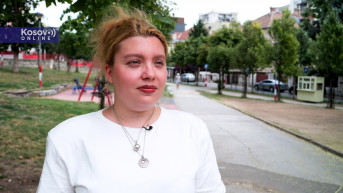
In 2025, the number of marriages in Serbia fell by 3.2 percent, while the number of divorces declined slightly by 4.4 percent compared to the previous year, according to data from the Statistical Office of the Republic of Serbia. However, over the past decade, the number of divorces has shown an upward trend. Belgrade-based psychologist Andjelija Nesic explains that the main reasons are poor communication between partners, as well as numerous economic and social factors.
According to the latest data from the Statistical Office of the Republic of Serbia, 10,148 marriages were dissolved in Serbia in 2025, representing a 4.4 percent decrease compared to the previous year. The divorce rate stands at 1.5 per 1,000 inhabitants. The average age at divorce was 45.6 for men and 42.1 for women.
The majority of divorces involved couples with children, totaling 5,318 cases (52.4 percent). Among divorced couples with children, those with one child accounted for the largest share, with 2,647 cases (49.8 percent). After divorce, dependent children were most often placed in the custody of their mother, in 3,487 cases (65.6 percent). The average duration of a marriage ending in divorce in 2025 was 13.9 years.
According to psychologist Andjelija Nesic, it is difficult to identify a single cause of divorce.
"It is often the result of several factors acting together. These may include economic reasons, such as financial instability, when couples focus on securing their livelihood instead of nurturing their relationship. This leads to a lack of patience and emotional regulation between partners. The reasons may also be social, reflecting the clash between traditional expectations and an individualistic value system. They can also be emotional, since marriage is now viewed as a place for personal growth and development, where mutual affection and emotional stability are important, rather than solely as an economic union," Nesic told Kosovo Online.
She says couples often seek psychotherapy because of poor communication, which is typically characterized by blaming one another, trying to assign fault, using the silent treatment as punishment, passive aggression, and an inability to truly understand and listen to each other.
"Another leading cause is when a couple fails to place their new family ahead of their family of origin. Particularly in our region, men often struggle to separate appropriately from their primary family, making it difficult to establish proper intimacy between partners. Disagreements over parenting styles, as well as emotional distance and growing apart, are also common," Nesic said.
She adds that numerous problems can arise after divorce, but emphasizes that couples therapy is not considered successful only if the partners stay together.
"In such cases, couples therapy becomes divorce therapy, with the goal of helping the couple separate peacefully so that all family members, especially the children, suffer as few negative consequences as possible. A therapist's goal is not to influence whether a couple stays together or divorces, but to help resolve conflict. Conflict resolution can also mean establishing good communication and achieving a conflict-free divorce," the psychologist said.
However, when a couple has children, the greatest challenges involve co-parenting and clearly defining parental roles.
"If unresolved conflict remains between the partners, children may develop divided loyalties, feeling the need to take one parent's side over the other's, which creates confusion. In extreme cases involving high-conflict divorces, a child may become alienated from one parent, which constitutes a form of emotional abuse. It is also common for one parent to become overwhelmed by the day-to-day responsibilities of raising the child, while the other becomes a so-called 'weekend parent.' Another particularly challenging moment is introducing children to a new partner of one parent and helping them adjust to a blended family. It is important to remember that the children's well-being must come before the emotional hurt of the former partners," Nesic concluded.
Ethnically homogeneous marriages remain the most common
On the other hand, 29,402 marriages were registered in Serbia in 2025, representing a 3.2 percent decrease compared to the previous year. At the same time, the number of first marriages totaled 24,309, which was 2.8 percent lower than in 2024. The marriage rate stands at 4.5 per 1,000 inhabitants. The average age at marriage was 34.4 for grooms and 31.4 for brides.
Ethnically homogeneous marriages, meaning marriages between spouses of the same nationality, were the most common, totaling 24,258 (82.5 percent). Spouses with the same level of education accounted for the majority of marriages, with 20,180 cases (68.6 percent). Regarding economic activity, in 21,734 marriages (73.9 percent), both spouses were economically active. Most marriages were concluded between citizens of the Republic of Serbia, totaling 26,687 (90.8 percent).
"Men and women are marrying later in life, but they are also divorcing later. The average age difference between spouses is three years, with men generally being older than women in both marriages and divorces," the Statistical Office of the Republic of Serbia said in its report.



0 comments