
Joksimovic: British Labour Party has a vivid memory of everything that happened in our region
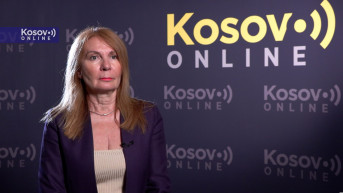
Aleksandra Joksimovic, Director of the Center for Foreign Policy and former Serbian Ambassador to London, commented ahead of tomorrow's elections in Great Britain, stating that the Conservative Party is on the verge of losing power, while Labour leader Keir Starmer is steadily advancing towards the position of Prime Minister. Should the Labour Party form the new government, it will not bring changes to London's stance towards the Balkan region, as, according to Joksimovic, the United Kingdom's foreign policy is one of continuity regardless of who is in power.
The Labour Party, she adds, retains a vivid memory of the events that have occurred in the region over the past decades, and ministers from the shadow cabinet have already visited the area.
"Tony Blair was one of the major players during the crises and conflicts in our region. He came to power in 1997 and actively participated in various stages of conflict resolution and attempts to establish lasting peace and reconciliation in the region. Therefore, the Labour Party has a vivid memory of everything that has happened in the region. Ministers from the shadow cabinet have already visited the region, attempting to establish certain communications; they have been to Sarajevo, Pristina, etc., actively trying to keep up with current issues," Joksimovic told Kosovo Online.
She adds that with a potential Labour government, there will be personnel changes, and it is possible that the UK's special envoy for the Western Balkans will be someone of their choosing. The United Kingdom, she says, believes that the ultimate goal for resolving the region's problems is full membership in the European Union, which they advocate for, while also strongly focusing on security and defense issues. In this context, they want their presence to be felt and to make an active contribution.
At this moment, Joksimovic emphasizes, Labour has a significant advantage, but it would not be as large if Nigel Farage, a former member of the Conservative Party, had not entered the election process.
"He himself has never managed to enter Parliament but has developed extremely right-wing ideas and is now running in the upcoming elections. It is not expected that he will achieve a significant result, despite the high support percentages, but he will cause enormous damage to the Conservative Party. This is his role at the moment, and he does not hide his desire to harm the Conservative Party. He introduced an element of foreign policy into the election campaign when he said that the West is responsible and provoked Putin to carry out aggression against Ukraine. At that moment, both Labour and Conservatives sharply attacked him. The Conservative Party has mostly tried to avoid dealing with Farage, as they also have their own far-right wing, but it seems that in the final phase, Prime Minister Sunak has decided to confront Farage's ideas, and at this moment, Farage's ratings are slightly declining," Joksimovic noted.
However, she points out that making precise predictions about the election results in Britain is very difficult due to their electoral system, and there have been moments in their history when a Labour victory was predicted but did not materialize.
"There are 650 constituencies, and the winner is the one who has the highest percentage on election day. Even if it's just 30 percent, it's enough to win. But at this moment, we are still talking about a more than 20 percent difference in support in favor of Labour, which is almost the highest support since Blair's time," said Joksimovic.
She recalls that the Conservative Party has been in power for 14 years, and British citizens are currently dissatisfied with the rising cost of living, high energy prices, a weak healthcare system, frequent strikes, and government actions to prevent further migration inflows that have yet to yield results.
She also notes that internal party politics have been very dynamic, with four prime ministers in the last five years, four foreign secretaries, and eight ministers for Europe, who are directly responsible for our region.
"This internal party dynamic has been very turbulent and continues even now. At a time when they are fighting for election results, they are simultaneously lobbying for a potential future leader of the Conservative Party," said Joksimovic.


0 comments