
Joksimovic: During the 2004 violence we encountered harrowing scenes; Everything was done to erase traces of our existence
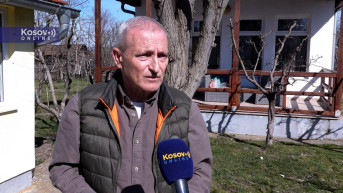
Journalist Zarko Joksimovic, recalling the March pogrom in Kosovo in 2004, told Kosovo Online that, together with his colleagues, he spent three days visiting burned towns and churches, and that the scenes they encountered were harrowing, as everything was literally being done to erase the traces of Serbian presence. What was particularly surprising, he notes, was that no one could order the foreign troops present to stop the perpetrators of violence.
He first received information that there were fatalities across Kosovo while he was in Pristina.
“Around noon, my colleague Nenad Filipovic and I happened to be in Pristina on some assignment, in a restaurant across from the UNMIK headquarters, where Serbs usually gathered during coffee breaks. Unaware of what was happening around us, we heard that in Caglavica the situation had already escalated into what could be described as war. We heard ambulance sirens throughout the city. I received a call from a relative in Mitrovica informing me that there were already fatalities on the Serbian side there. We were somewhat taken aback. Such events could always be expected here, but not with such intensity and on such a scale,” said Joksimovic, who at the time was a correspondent for RTS.
The scene they later encountered in Caglavica, he says, was harrowing.
“Tens of thousands of people from Pristina moved toward Caglavica. On the way, as we passed toward Kosovo Polje, part of it was already burning. In fact, everything that remained Serbian—up to the health center—was in flames. Along the way, in a commercial zone, we encountered about twenty American ‘frogs,’ as they are called. They were present, but they were not engaged in preventing this organized terror aimed at expelling the last remaining Serbs from the area. They were waiting for something, I do not know what. While the police were expelling the remaining Serbs in Kosovo Polje, they sat calmly. By the time we arrived in Caglavica, part of it was already burning,” he recalled.
He added that the Swedish battalion had lined up its armored vehicles, while its members were reclining on them in the March sun, again seemingly waiting.
“In the meantime, they were distributing rations and even eating while people were being killed and houses were burning. We documented and recorded everything, somewhat astonished, hoping that this was just an isolated incident. However, reports spread that the violence had assumed massive proportions and that there was hardly a town where it was not occurring. From the direction of Lipljan, a large crowd was moving toward Laplje Selo. We saw a crowd that was stopped at what is now the roundabout toward Marigona. In Caglavica, the local Serbs defended themselves,” Joksimovic stated.
However, he added, it was not possible to send the recorded material to Belgrade at the time, as the usual practice was to send tapes to correspondents’ offices in Prokuplje or Nis, while the transmission link that existed in Zvecan at TV Most was either broken or destroyed.
“Only a few days later, after we had been the first team to visit Lipljan, the burned Kosovo Polje, the burned ‘Ju program’ building in Pristina, and the burned Church of St. Nicholas in Pristina, did we manage to forward the first tape to colleagues waiting for us across the administrative line. That was when the first footage from this area, south of the Ibar, reached RTS, and through RTS it was shared internationally,” Joksimovic said.
The violence itself, he noted, could not come as a complete surprise to those who had experienced the war in 1999, but he emphasized that it was more widespread than in previous years.
“What surprised us was the indifference and the fact that no one from the command structures was able to order that the perpetrators of violence and terrorists be finally stopped. No one. And this continued for days. There were individual cases, outside the chain of command, where in one village in the north, thanks to a French captain—perhaps he held another rank—a decision was made to remain in Gojbulja, and the village was saved. The same happened in Karic’s building in Lipljan, where they were literally setting fire to a building inhabited by Serbs, and no one wanted to intervene. Only one Finnish officer drove in with his vehicle and rescued several families,” he stated.
Nevertheless, he concluded that even the behavior of foreign forces was not entirely unexpected.
“They came here to build a state. The fewer of us there are, the better for them. Less work, and the process of state-building will continue without any resistance from our side,” Joksimovic said.
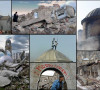
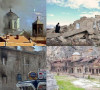
Over the following two days, 18 and 19 March, the RTS team also visited and recorded burned Prizren, the Monastery of the Holy Archangels, and the Church of the Virgin of Ljevis.
“They literally did everything to erase the traces of our existence, and that continues to this day. Back then it was through violence and killings; now it is through administrative measures and laws. That is something we continue to endure and resist. I hope we will withstand this latest attempt at expulsion as well. March 17 has, in a way, continued to this day—through laws, court proceedings, often without any basis. Journalists now spend more time in courts than anywhere else. Anyone who attempts to monetize their property ends up in court. This law and what is currently happening have the same objective—to continue what began on March 17 and to bring it to completion by closing our schools and hospitals,” Joksimovic concluded.

0 comments