
Joksimovic: Trump lowered tensions, Europe can be satisfied with his messages from Davos
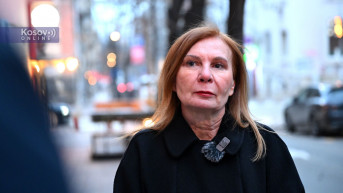
Aleksandra Joksimovic, Director of the Center for Foreign Policy and former ambassador to London, emphasized that US President Donald Trump lowered tensions in his speech at the World Economic Forum in Davos, and that Europe can be satisfied with his messages that he does not intend to intervene in Greenland and that he sees the possibility of reaching an agreement on Ukraine.
“I think that Europe, regardless of the high level of nervousness that preceded Trump’s arrival in Davos, will be satisfied with his speech. We must note that a large number of European Union leaders left the gathering before Trump’s arrival, which is also a diplomatic signal. But it should be said that in his speech he first conveyed many messages that were intended for the domestic political situation in America,” Joksimovic told Kosovo Online.
She believes that Europe will be most satisfied with his statement that he has no intention of militarily intervening in Greenland, even though he continues to insist on negotiations over the potential sale of Greenland.
“Of course, he referred to all the support of the United States, primarily to Europe, dating back to the time of the Second World War, and in that context he offered certain arguments as to why Greenland would be significant as part of the United States,” she noted.
She assessed that it is also important for Europe that the US president highlighted the possibility of reaching an agreement in Ukraine and confirmed that the United States remains fully committed to NATO.
“These are the theses that interest Europe the most. He also mentioned a meeting with Zelensky and, importantly, once again changed his rhetoric about who is responsible for the absence of peace. He, so to speak, shared responsibility between Moscow and Kyiv, saying that when one side wants peace, the other does not accept that kind of peace, and vice versa,” the former ambassador said.
She also pointed to his message that Europe “is not moving in the right direction” and that the United States participates one hundred percent in the work and functioning of NATO, and that it will continue to do so.
“I think these are some of the most important messages we heard. So there has been no dramatic distancing from Europe to the point of no return. It is likely that the level of trust that once existed among allies has been lost, and it will take time to restore it. But of course, that does not mean that Trump will not come out with some harsher statements again in the period ahead. In any case, we can say that this speech was formulated with far less tension than might have been expected, given all the messages he sent, primarily to Europe, before this world economic forum began,” Joksimovic said.
Commenting on relations between Belgrade and Pristina, she assessed that this is not one of the topics in focus at this year’s Davos forum, nor of the Trump administration.
“The United States had certain ideas regarding the resolution of this issue during Trump’s first term, but in his second term, due to pressing issues around the world, this topic has not yet found its place on the US President’s agenda,” the former ambassador said.
According to her, certain messages have been conveyed through the National Security Act, which addresses democracy in the Western Balkans.
“Will Trump adhere to this act in the steps that follow if he is at all focused on the topic of Belgrade and Pristina? We know that in his speeches he repeatedly mentions that he recently prevented a war. We do not know which conflict he is referring to, but perhaps he knows something that we do not. It is truly difficult for me to speak about this, but among the eight conflicts that he has ‘stopped’ he constantly mentions Serbia, that is, Belgrade and Pristina,” Joksimovic said.
She noted that the Washington Agreement was signed at the very end of Trump’s term and that most of it was not implemented.
“The question is constantly being raised as to whether he will insist on full implementation or perhaps look for some new solutions, bearing in mind that at the time he encountered serious resistance among European countries and failed to realize those ideas,” our interlocutor pointed out.
She emphasized that such ideas are not present in the National Security Act, which instead speaks very sharply about mutual recognition.
“Whether the moment will come when he will be able to deal with this topic more seriously remains to be seen over the course of this year. It should be borne in mind that this year also brings midterm elections for Congress. This is very important for him, and he has already sent messages that if he does not again win a majority in both chambers, the House and the Senate, Democrats could initiate his impeachment, which he believes might this time be successful, although history has not confirmed this on many occasions,” the Director of the Center for Foreign Policy said.


0 comments