
Dencic: Trump expects Europe’s cooperation on Greenland, messages from Davos also important for Belgrade
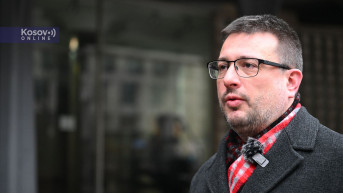
Nikola Dencic, editor of the foreign affairs desk of Radio Belgrade’s First Program, assessed that US President Donald Trump sent a message to Europe at the World Economic Forum in Davos that he would not abandon a form of taking control over Greenland, but that it would not involve a violent takeover, rather that he expects cooperation from European and NATO partners.
Speaking to Kosovo Online, Dencic pointed out that Trump devoted most of his attention to US progress over the past year, given that one year has passed since his inauguration for a second term.
“As for the messages sent to Europe as a whole, primarily to European Union member states, they relate to the fact that Trump will not give up on some form of taking control over Greenland, which has been one of the most important topics for our continent, but also for the entire world, in recent days and weeks,” Dencic said.
He recalled that Trump also stated there would be no violent takeover of control over that strategically important island, but that he expects cooperation from both European partners and all NATO partners, so that what he considers one of the most important locations for US security – Greenland – would in some way come under Washington’s control.
“What lies ahead are the talks he will hold on the margins of the summit in Davos. A number of European leaders are currently not in Switzerland, some withdrew earlier from participation in the forum, while others returned to their countries immediately after their speeches. Talks are also expected at the level of the European Union, that is, the European Council and the leaders of the member states, and it is believed that a certain position and response to be sent to Trump will then be formulated, primarily regarding the issue of Greenland,” Dencic said.
He assessed that the messages sent by the US president are aimed mostly at European Union member states, primarily Western Europe, but that they certainly also affect the region and Serbia.
“On the one hand, as a country that belongs to this continent, and on the other as a state that is in the process of negotiations on accession to the European Union, it is certain that everything related to the Union can in some way also relate to official Belgrade,” Dencic said.
According to him, Serbia could in the coming period face the question of positioning along the America–Europe line, but it remains an open question whether Belgrade at this moment has reason to, and to what extent it should, engage in discussions at those levels.
“We are not talking about some kind of alignment, because relations along the America–Europe line are still open and everyone hopes that problems will be resolved through dialogue, but the question remains of the orientation of current Serbian foreign policy. The official position we have heard is that, with respect for the territorial integrity and sovereignty of all states, which Serbia always insists on, talks among the leading world powers must be followed and that, accordingly, our position can possibly be adjusted,” Dencic said.
Regarding the participation of Serbian President Aleksandar Vucic and Kosovo Prime Minister in a technical mandate Albin Kurti at the World Economic Forum, Dencic said that the participation of European and global officials in Davos implies not only official panels and discussions, but also numerous important talks on the margins.
“According to available information, President Vucic has so far discussed bilateral issues, energy, and Serbia’s further economic growth with his interlocutors, that is, topics primarily related to Serbia’s relations with other states, with messages that global issues are also being considered and that efforts are being made to achieve a certain consensus,” Dencic said.
As for representatives from Pristina, Dencic assessed that, as at other international gatherings, they use the forum in Davos to promote their agenda and seek support for the moves of official Pristina, while the results of this are yet to be seen.
“A large number of talks take place on the margins, many meetings are informal, and we will certainly see the results in the days or even over a longer period after the Davos forum ends,” the Radio Belgrade editor concluded.



0 comments