
Jovanovic: Minister Aliu's statement about "Greater Albania" endangers the sovereignty of other Balkan states as well
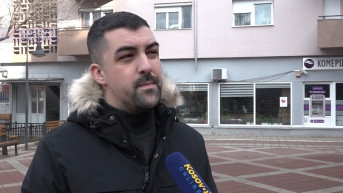
Professor Luka Jovanovic from the Faculty of Philosophy at the University of Pristina with a temporary seat in Kosovska Mitrovica says for Kosovo Online that the statement of Kosovo's Minister of Infrastructure, Liburn Aliu, who referred to Kosovo as a "temporary project without a complete identity," endangers the sovereignty of other Balkan states, as well.
He explains that such a statement should be viewed in the context of the creation of "Greater Albania."
"This is not a new plan, nor is it a new idea or goal. It is actually an idea that has been present for 150 years among the Albanians themselves, specifically among the Albanians in Kosovo and Metohija. What we heard from the minister in question is another confirmation of the implementation of the Greater Albanian policy, which has been shaping up for a century and a half, as we can see. What he said in the context of the so-called Kosovo is that Kosovo should only represent a step towards the 'Greater Albania.' Of course, the sovereignty of other states is endangered, not only the Republic of Serbia but also the sovereignty of Montenegro, North Macedonia, and Greece. These long-term plans still need to be realized, as I mentioned before. We can see this in practice in North Macedonia. The local Albanian community has gained a significant share in power, and we can hear similar statements from Albanian ministers in the government in Skopje. The problem with Montenegro is that they cannot create such compactness as they have in Kosovo and Macedonia, nor in Greece. This statement itself represents a small confirmation and an officially stated truth that we have been aware of for decades, almost a century and a half," Jovanovic says.
He explains that the statement by Minister Aliu is problematic and should be viewed in a historical context and with the aim of uniting people living beyond the borders of their home country.
"Many ministers have also realized that such an act will lead to the loss of functions and many levers of power that Pristina has. We must not forget or have any illusions about the absolute unity of the Albanians. They are not united; they have been and remain extremely divided, linguistically, culturally, and politically. Especially in recent years and months, we have seen diversity in the Pristina-Tirana relationship, where Pristina often did not allow Tirana to position itself as the boss, which Tirana wants to be. The problem is how to manage Kosovo, i.e., in that Greater Albanian project, as a future province of Albania, and what will happen to Pristina officials; that is actually the main problem. Again, such problems are not new among the Albanians themselves; they have always had diversity in the Pristina-Tirana relationship, and I think these problems will exist in the future, and it will be difficult to overcome them, especially due to one fundamental question – whose will be the priority," Jovanovic notes.


0 comments