
Jovanovic: Pristina wants to turn the north into a sterile environment without memory or Serbian culture
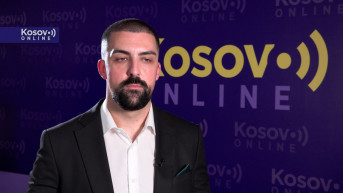
By repainting several murals in majority-Serb municipalities in northern Kosovo and, just two days later, unveiling a new mural in Decani dedicated to KLA members, historian Luka Jovanovic believes a clear message was sent: that Pristina wants to turn the north into a sterile environment — without memory, culture, or public life — something that will make life there extremely difficult.
According to Jovanovic, the latest mural dedicated to the KLA in Decani was not painted by chance, since such murals have been created daily in Albanian communities for years, and often in Serbian areas as well, where they carry a negative connotation for the local Serb population.
“The message is that Serbian graffiti as a social phenomenon has no place in the north, but it does in the south. The message is also that Albanians live freely, while Serbs are a people in a ghetto — and that this ghetto is considered legitimate,” Jovanovic said.
He explained that the central authorities in Pristina consistently send the message that there are uncompromising historical themes in Kosovo, and these concern the KLA, its leaders, and the Albanian past.
“On the other hand, themes relating to Serbian history and Serbian figures — even those who contributed positively to the Albanian people — have no place in the public sphere in Kosovo and Metohija,” he stressed.
Jovanovic recalled that nearly three decades of erasing Serbian memory in Kosovo have passed, a trend particularly visible in the last five years.
“There has been a systematic attack on everything that represents Serbian heritage, regardless of whether the monument came from the early Middle Ages, the late Middle Ages, or more recent times. First, efforts were made to convince the Albanian population that most monuments belonged to Albanian creativity and history. Especially after the events of 1999 and the March pogrom of 2004, we witnessed a general assault on Serbian cemeteries, monuments, frescoes, inscriptions, and on the Cyrillic script itself. The message was clear: there is no place in Kosovo and Metohija for Serbian historical memory or culture, which has existed there for centuries — I would even say for millennia,” the historian emphasized.
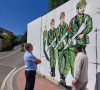
He argued that the latest developments in the north, especially in North Mitrovica, once again send the message that murals and monuments cannot have their place, even when they convey messages of reconciliation.
“The murals featured historical figures, Patriarch Pavle and Metropolitan Amfilohije, who in Kosovo and Metohija — even among Albanians — are remembered for their goodness, never for anything bad. I will recall the well-known story Patriarch Pavle himself told about candies: that whenever Albanians threw stones at him, he would respond by handing out candies to Albanian children. To whitewash such a mural sends a negative message to Serbs from Pristina, but also a double-edged message that could prove dangerous for both Serbs and Albanians. The message to Serbs is that their memory and history have no place in the so-called Albanian state, and that even the good deeds done for Albanians are dismissed and easily forgotten,” Jovanovic warned.
At the same time, he underlined that everything directed against memory “only causes memory to grow stronger.”
“With this act, Serbs have only been reminded of the good deeds of Patriarch Pavle and Amfilohije, of many historical figures, and of their fellow citizens whose faces and messages Mitrovica and Zvecan residents placed on display for all citizens, of every nationality, to see,” Jovanovic concluded.


0 comments