
Kabasic: Much harsher terms have been used for the KLA in Kosovo than Popovic’s words—yet no one was held accountable
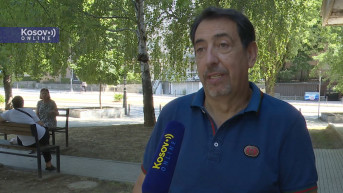
Former judge of the Higher Court in Kosovska Mitrovica, Nikola Kabasic, stated that in public discourse in Kosovo over the past several years, the Self-Determination Movement (Vetëvendosje) has not been favorable toward the KLA, its legacy, or its leaders. He noted that much harsher terminology has often been used than the words employed by Igor Popovic, Assistant Director of the Office for Kosovo and Metohija of the Government of Serbia, who was arrested on Friday for his statements about the KLA—but that no one has ever been held accountable for similar or worse remarks.
“Following the detention of Igor Popovic, I believe we have reached a situation where Pristina has further escalated its instrumentalization of the police, the Special Prosecutor’s Office, and the Special Court, as well as the narrowing of space for freedom of opinion and public expression—especially for Serbs and other non-Albanians in Kosovo and Metohija. I believe that in the future we will need to be extremely cautious, as anyone could become a target under Article 147, paragraph 1 of the Kosovo Penal Code, which refers to inciting or provoking hatred and discord based on national, racial, religious, or other differences,” Kabasic told Kosovo Online.
He pointed to another dimension of this case: the detention of Popovic, a senior official of the Serbian Government’s Office for Kosovo and Metohija, has internationalized the longstanding issues faced by Serbs in Kosovo—issues that have been especially intensified in the last two to three years since Vetëvendosje came to power and Xhelal Sveçla became Minister of Internal Affairs.
“Since that moment, the political program Vetëvendosje had regarding Serbs has turned into institutional pressure that systematically limits the space in which they live, creating conditions that are likely to lead them to leave Kosovo. Through decisions and verdicts by the Special Court, a political standard and framework is being imposed within which Serbs are expected to live and operate—a paradoxical situation. Increasingly, the use of national symbols, flags, the display of national heroes or historical Serbian figures in Kosovo is being criminalized and falls under the scope of the aforementioned law,” warned Kabasic.
Considering that two years ago former president of the Provisional Authority of Zvecan and former Kosovo government minister Ivan Todosijevic was acquitted for the same offense now attributed to Popovic, Kabasic said that the Supreme Court of Kosovo adopted a sound, clear, and well-reasoned position in the Todosijevic case, giving guidance and instructions to lower-level courts—including the Basic Court and Court of Appeals—and even criticized the Special Prosecutor’s Office for its overly restrictive interpretation of the law.
“They said that in the future, a clear distinction must be made between freedom of public expression and what constitutes incitement or provocation of national hatred. They referred to several rulings of the European Court of Human Rights and clearly stated that facts must be proven, whereas opinions do not need to be proven—because they can be true or false, right or wrong, based on knowledge or ignorance. Freedom of opinion must be guaranteed in Kosovo, as stipulated by Article 10 of the European Convention on Human Rights and Fundamental Freedoms, which is directly incorporated into the Constitution of Kosovo through Article 22 and takes precedence over all other laws,” Kabasic explained.
Every citizen—anywhere in the world, including Kosovo—regardless of whether they are Serb, Albanian, or of another ethnicity, has the right to freedom of opinion and public expression, as this is guaranteed by international conventions, international standards, and the Constitution of Kosovo, he added.
“Accordingly, Serbs also have the right to express their opinions. Of course, there is a limit, and speech that truly incites hatred is another matter entirely. Provocative speech, inflammatory speech, or the use of strong language still falls under freedom of expression. I believe that, just like in the Todosijevic case, there is no criminal offense in the case of Igor Popovic. Pristina’s intent is obvious—verdicts have banned the word ‘Metohija’, the case of Racak has been criminalized via the Todosijevic trial, and now Igor Popovic is being prosecuted for mentioning an event for which the KLA is responsible, and which is included in the indictment before the Hague tribunal where top KLA leaders are on trial and the Orahovac incident is part of the case,” he emphasized.
He stressed that Serbs have the right—and should continue—to express their views publicly on various social issues, as these can also be political opinions, and no one has the right to prosecute them for that.
Kabasic explained that Article 147, paragraph 1 of the law, which refers to inciting or provoking interethnic hatred or discord, is complex and provides for two actions—inciting religious, racial, or national hatred, and the second—fomenting religious, racial, or national hatred.
“And it must be public. The article says ‘whoever publicly incites or foments,’ meaning it must be expressed in public. The final element that must be fulfilled is that it causes a significant disturbance to public order and peace. In this specific case, it would mean that Popovic’s statement, or those of other Serbs previously, led to protests, demonstrations, blockades, unrest, or the like. All these conditions must be cumulatively met, as the Supreme Court states in its ruling. So, it must be a public statement that incites or provokes national hatred and, as a result, causes a disturbance to public peace and order. That did not happen here. From what I heard from his lawyer, the Prosecutor’s Office claims that Popovic’s statement significantly disrupted interethnic relations between Serbs and Albanians. However, we haven’t seen any evidence of that. Less than two hours passed between his statement and his arrest. No one even knew about it until Minister Sveçla went public. That alone shows the kind of legal system we are dealing with—and that Serbs cannot expect a fair trial when the Minister of Police dictates the investigation and the course of the judicial process,” Kabasic concluded.



0 comments