
Kosovo in the UN - a red line for Belgrade
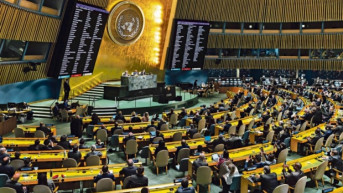
The biggest pitfall of the European plan for solving the Kosovo problem is hidden in Article 4, which states that Serbia will not oppose Kosovo's membership in any international organization. This item is read as opening the door to Kosovo in the United Nations (UN). Belgrade has repeatedly emphasized that membership in the UN was Serbia's red line, but criticism continues to go in that direction. Experts for "Blic" say that the chances of that are small and explain what the path to the chair in that organization is like.
Every country has the right to apply for membership in the UN. The procedure starts in the Security Council, and the request is decided by the Reception Committee - first, through a team of experts from the member states of the Security Council, and then through a team of ambassadors from the same countries.
Those two opinions, through the general secretary and the chairman of the Security Council, arrive at the session, and based on them, the Security Council makes a decision.
The former ambassador of Serbia to the UN, Vladislav Jovanovic, explains that the Security Council must give its consent.
"They will give their consent if the home state does not dispute the second if it is in accordance with the geopolitical interests of the permanent members of the Security Council," he states.
In practice, without obtaining the consent of the state from which a certain territory is seceding, that path is not taken.
The negotiations that are being conducted now, says the former ambassador of Serbia to the UN, aim to do just that - that the West in one way or another secure Serbia's consent.
"In my opinion, they won't get that consent, and then it remains to continue to put pressure on Serbia so that if it won't give by grace, it will give by force, which is impossible in this situation. It is important for them not to subsequently jeopardize the purity of the defender of international law, and they would do that if they started putting stronger pressure on Serbia again," he says.
Branka Latinovic, the ambassador of Serbia to the OSCE, says that she does not see that there is room for this issue to be opened at this stage.
"I think that the proponents themselves are aware of the fact that it is a very delicate issue and that even they would not be successful at this stage, given the attitude of Russia and China," she says.
Serbia's special track is the policy of recognition because, if we go back to the procedure - when the Security Council makes a positive decision, the issue goes before the General Assembly, which decides without a vote, by acclamation.
The interested country has the right to request a vote, but this would mean that it has secured a two-thirds majority, at least 139 votes. Currently, 106 countries do not recognize Kosovo, and 84 do.
"So all this is what would be called in English "for the time being" if that time comes at all,” she states.

0 comments