
Kostic: Renewed UN engagement on Cyprus could advance the issues of the CSM and Serbia's sovereignty
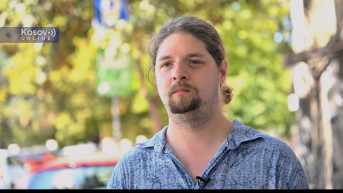
Renewed United Nations engagement in resolving the Cyprus issue could also affect the Belgrade-Pristina Dialogue, particularly with regard to the establishment of the Community of Serb Municipalities and the issue of Serbia's sovereignty over Kosovo, Mijat Kostic of the New Third Way organization told Kosovo Online.
He said that greater international interest in resolving frozen conflicts could create room for a new phase in addressing the Kosovo issue. He stressed that the most important factor was that, after a long period of relative calm, the Eastern Mediterranean was once again entering a period of potential tensions.
"What matters is that, after a long period of peace, we are once again entering a period of potential tensions. The main reason they want to resolve this diplomatically as soon as possible, in order to avoid prolonging a frozen conflict that could escalate, is that tensions exist between Israel and Türkiye. Israel has formed a military alliance with Greece, Cyprus, and the UAE, and potentially with India as well, for joint defense in the Mediterranean. If a direct conflict between Türkiye and Israel were to occur, this could draw Cyprus itself into the resolution of this frozen conflict. If Greece, as Israel's ally, were to side with Israel, that would also imply the possibility of war between Greece and Türkiye. Of course, the very fact that both sides are NATO members serves to prevent that, but tensions in Cyprus could nevertheless become a major issue on the international stage," Kostic said.
According to him, such a development could constitute a precedent for Serbia, particularly regarding membership in the European Union.
"For Kosovo, this could mean that certain issues that may have appeared resolved or temporarily resolved can now be reopened and that some positions may change. The parallel lies in the fact that Cyprus became a member of the European Union even though the issue of sovereignty over part of its territory has not been fully resolved and there is a part of its territory that the international community does not recognize, while Türkiye does. This also constitutes a precedent for Serbia—that it is possible, without finally resolving the issue of sovereignty over Kosovo, to join the European Union through certain political compromises, with the Kosovo issue being resolved subsequently," he said.
Kostic warned that the example of Cyprus demonstrates precisely how frozen conflicts can pose a long-term security risk.
"We can see that this is a risk because any conflict that has not been fully resolved or has been frozen can subsequently escalate. What is important for Kosovo is that this issue is once again being placed on the United Nations agenda, which means that the Kosovo issue could once again become the subject of new negotiations or perhaps receive the attention of major powers, primarily the United States, which could be more favorably disposed toward Serbia. This could herald a new reshuffling of the cards," Kostic assessed.
Speaking about the possibility of individual countries withdrawing their recognition of Kosovo, Kostic said that this possibility always existed, but that much would depend on how the Cyprus issue was resolved.
"That is always a possibility. In the case of Cyprus, the key issue is how the conflict is resolved. There is an internationally recognized government of Cyprus, which believes that some form of federation should be established—that is, a single state with federal units. On the other hand, we have heard Erdogan say that he will under no circumstances agree to the Turkish Republic of Northern Cyprus relinquishing its sovereignty and becoming part of a federal unit. Instead, he advocates a two-state model in Cyprus, which would mean the existence of one Turkish and one Greek entity," he said.
He added that, in such a situation, the Kosovo issue would once again come to the forefront, primarily because the Community of Serb Municipalities had not been established.
"In that situation, the fact that there is no CSM, which was supposed to be established in accordance with international law, comes to the forefront. We can see that tensions in Cyprus could also be reflected in Kosovo because the internal arrangement and status of individual entities have not yet been resolved. If that issue is now being addressed elsewhere, perhaps Kosovo will also come onto the agenda. The fact that the United Nations has now shown an interest in bringing this issue to a conclusion could encourage the resolution of issues such as the Kurti government's reluctance to establish the CSM and, of course, the issue of Serbia's sovereignty over Kosovo, just as the issue of the sovereignty of the Turkish republic is being raised in connection with Cyprus," Kostic said.
He added that, despite the differences between the two cases, there were elements that connected them.
"We can see that, although these are different examples, with different causes and different approaches to resolving the conflicts, they have certain characteristics in common. Perhaps the moment has now arrived when these conflicts could either be resolved more rapidly or the manner in which they will be resolved could be defined," Kostic concluded.


0 comments