
Kotlar Trajkova: The EU views national identities of candidate countries solely through a political lens
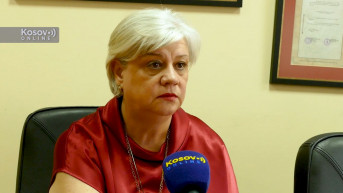
Historian from Skopje, Prof. Dr. Natasa Kotlar Trajkova, assessed that the exclusion of national references from the European Parliament’s report on North Macedonia’s progress toward the EU is a poor political decision, revealing that the Union views national identities of candidate countries solely through political interests.
“This is a political decision. A seriously political one—exceptionally rigid, inappropriate, and not beneficial for the European Union itself. You see, people in the Balkans know how to live with challenges and trials, even when they are political or military in nature. But this is an issue for the countries within the Union, and it shows that we are dealing with counterparts on the other side who face serious conceptual and functional problems. I believe that the attitude of all Balkan peoples should be revised and adjusted to what the European Union is offering us,” Kotlar Trajkova said in a statement for Kosovo Online.
She emphasized that this is largely driven by the “political and self-serving needs” of EU member states.
“Here, we can discuss what constitutes science, what constitutes politics or geopolitics. The greatest influence comes from geopolitics—namely the political and self-serving or individual needs of EU member states. Having spent time in Western Europe, I more frequently recognize outbursts of nationalism than what is usually attributed to Balkan nationalism,” the expert noted.
When asked how much the EU understands the need of Western Balkan peoples to have their own national identities, Kotlar Trajkova expressed confidence that they do understand—“because they start from their own perspective.”
“But political philosophy plays a significant role here. And in relation to the Balkans—North Macedonia, Albania, Montenegro, and other countries in the region—I believe they continue to act under the remnants of imperialism. I think the problem lies more with them, in their perception and understanding. The issue is not that we, the people from the Balkans, lack sufficient cultural or educational understanding. The mindset in the EU member states is far more rigid and serious—this is a challenge for us, for all Balkan peoples. We must assert our identity as a value and not back down,” she emphasized.
Therefore, she does not believe that this was an attempt to “quietly” diminish the significance of national identities in Western Balkan candidate countries.
“I don’t believe that’s what this is about. I think it’s a matter of entirely different political connotations—because identities are not exclusive to political entities,” Kotlar Trajkova stated.
She explained this through the example of Macedonian identity, which she believes should be viewed through a “complex network” of categories that constitute national identity.
“There are several types or components within that complex network called identity. And we must always be clear whether we are speaking about nominal, historical, or national identity. If we are speaking about cultural identity—which I consider the most important—then language, literature, folklore, and historical context come into play. That is why I believe that in public appearances, all political representatives must clearly state that they are defending Macedonia’s historical identity and cultural subjectivity—this complexity that defines our identity,” the expert explained.
She is convinced that Europe will only respond if the discourse begins to involve clearly defined identity formulations.
“And as long as Europe perceives us as superficial and inattentive in this context, we will continue to face such reactions from the European political scene,” Kotlar Trajkova asserted.
Speaking about the key characteristics of national identities in the Western Balkans, the historian noted that these identities emerged in the 19th century, when Europe sought to impose them as a form of “modernity.”
“Modernity—or nationality—is a product of the 19th century, when capitalism and entirely new values began to emerge in social, political, and economic life. As an example, I would cite the French bourgeois revolution of 1789, when the French themselves declared: ‘Now we shall build a national identity.’ What does that mean? One king, one army, one educational system, one monetary system—a unification that all of us peoples recognize today, including in the Balkans. I believe the national and nationalist movements, alongside romanticism, are among the greatest phenomena of the 19th century. Naturally, they should be embraced in the 21st century in a proper and appropriate way—not in an unsuitable or misguided manner,” the historian concluded.




0 comments