
Krasniqi: Assembly cannot abolish Specialist Chambers through parliamentary decision or resolution
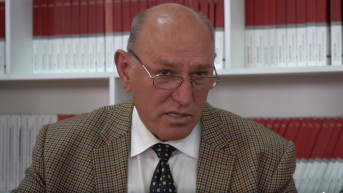
University professor Kol Krasniqi said that the Kosovo Assembly could not abolish the Specialist Chambers through an ordinary parliamentary decision or resolution. Doing so, he said, would require amending the Constitution, terminating the agreement with the European Union and regulating the status of proceedings and court cases that are still ongoing. He assessed that unilateral action could lead to serious problems at the international level.
Krasniqi wrote on Facebook that the Kosovo Assembly could not abolish the Specialist Chambers because the judicial mechanism had not been established solely by law, but was based on Article 162 of the Kosovo Constitution, the Law on Specialist Chambers and Specialist Prosecutor’s Office, the international agreement between Kosovo and the European Union, and the agreement with the Kingdom of the Netherlands as the host state.
“Therefore, an ordinary decision or resolution of the Assembly may carry political weight, but it cannot have the legal effect of closing the Specialist Chambers. Even repealing the Law on Specialist Chambers and Specialist Prosecutor’s Office would not be sufficient as long as Article 162 of the Constitution remains in force. An ordinary law cannot override a constitutional provision or a ratified international agreement which, pursuant to Article 19 of the Constitution, takes precedence over ordinary laws,” Krasniqi said.
According to him, a comprehensive legal attempt to terminate the mandate and functioning of the Specialist Chambers would require amending or repealing Article 162 of the Constitution; amending or repealing the Law on Specialist Chambers and Specialist Prosecutor’s Office; terminating, in accordance with the applicable legal procedures, the ratified agreement with the European Union; resolving the status of the agreement with the Netherlands; and regulating the status of proceedings and court cases that remain pending.
Krasniqi said that a constitutional amendment could be proposed by the President of Kosovo, the Government or at least one quarter of the members of the Assembly, namely 30 MPs. Before being put to a vote in parliament, the proposed amendment would have to be referred to the Constitutional Court for prior review to determine whether it diminished any of the rights and freedoms guaranteed by the Constitution.
“For its adoption, the votes of two thirds of all members of the Assembly are required, meaning at least 80 votes, including two thirds of the MPs holding guaranteed seats for members of non-majority communities. However, even completion of this domestic procedure would not automatically release Kosovo from its international obligations,” Krasniqi stressed.
He pointed out that Article 162 of the Kosovo Constitution linked the mandate of the Specialist Chambers to a notification mechanism involving the Council of the European Union in consultation with the Kosovo Government and that, consequently, a legally sustainable termination of their mandate could not be achieved through a simple unilateral act by the Assembly.
According to Krasniqi, at the international level, a unilateral attempt to abolish the Specialist Chambers could lead to a deterioration in relations with the European Union and the United States, damage Kosovo’s credibility, adversely affect Euro-Atlantic integration processes, and result in diplomatic and financial support being made conditional or reduced.
“It could also result in the issue being exploited for propaganda purposes by Serbia and create the perception that Kosovo’s institutions are interfering with the judiciary in order to protect certain individuals,” he stressed.
Krasniqi said it could not be stated in advance that such an initiative would automatically lead to sanctions, as that would depend on the political assessment of Kosovo’s international partners.
“However, strong diplomatic reactions and negative consequences for international cooperation would represent genuine risks,” Krasniqi said.
0 comments