
Krieziu: Constitutional Court ruling final, responsibility also lies with Members of Parliament
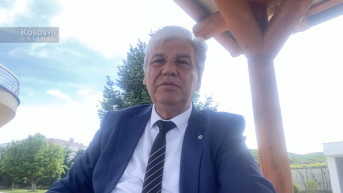
Former Deputy President of the Constitutional Court of Kosovo, Kadri Krieziu, stated that the ruling of the Constitutional Court is final, adding that even with the procedural solutions offered by the Court, responsibility for the constitution of the Assembly lies jointly with the members of parliament.
“The ruling is final. All parties involved have every right in the world to comment on it, to agree, to disagree, to praise or to criticize, but in practical terms, this matter is closed. Accordingly, I am very confident that, in line with past tradition, all political parties will strictly implement this ruling. Even with the new procedural solutions offered by the Court, responsibility for constituting the Assembly remains a shared responsibility. We will see what happens. The ball is once again in the MPs’ court,” Krieziu wrote on Facebook.
He noted that a careful reading of the August 18 ruling shows that the Court left significant room for justification, since in its June 26 ruling it was not clearly stated that “previous parliamentary practices” implied public voting.
A clear decision on June 26 would have fundamentally changed the course of events in the past six weeks and spared everyone the political drama, Krieziu said, adding that the Court failed to exempt itself from co-responsibility for the situation created.
Regarding the decision on public voting, he stressed, the Court was very careful in its wording.
“The Court neither excludes nor denies the legality of secret voting, but links the decision on public voting to the lack of parliamentary consensus in favor of secret voting. Therefore, the Court does not decide in favor of one form of voting over another—which would have been a clear overreach—but instead, based on the principle of sound democratic logic, directs the process toward public voting. I consider this conclusion logical and sustainable,” Krieziu said.
As for the decision to limit the right to nominate a specific candidate to three times, Krieziu noted that the Court did not provide convincing legal arguments.
“The language used in the reasoning implies that the Court itself is aware of this fact, which is why at the end of paragraph 152 of the ruling it is stated: ‘The Court considers that the Assembly in the future may complete the legal norm on the constitution of the Assembly through its Rules of Procedure, but until they are amended, the procedural solutions provided by this ruling will apply.’ Thus, the Court was very cautious, refraining from the temptation to write procedural rules itself, and leaving it to the Assembly to adopt a clear procedural norm in the future,” he added.
Krieziu pointed out that the Court’s legal finding that it should offer a procedural solution until the Rules of Procedure are amended is interesting, even though, from a legal standpoint, it is not entirely convincing.
“This is a well-intentioned legal shortcoming aimed at staying between the opposing positions of the parties. In paragraphs 153 and onwards, the Court uses proper language in correctly establishing that responsibility for the constitution of the Assembly is a joint responsibility of all elected MPs. The Court also recalls that failure to constitute the Assembly endangers the fundamental principles of the democratic order of the Republic,” he said.
Krieziu believes that, procedurally speaking, the way forward is clear—that the presiding officer must convene the continuation of the constitutive session as soon as possible, and that, once the largest parliamentary group proposes a concrete name for Assembly Speaker, MPs must vote on that candidate.
If voting for that candidate fails and the largest parliamentary group again proposes the same name, he recalled, this can be attempted two more times.
“Thus, in the third attempt at voting—whether within the same session or an extended one with breaks over six days (three attempts every 48 hours)—if 61 votes are still not secured for that candidate, the nomination for Assembly Speaker is deemed unsuccessful,” Krieziu explained.
He added that after the third failure, the largest parliamentary group must change the candidate.
“And then the entire procedure begins anew. That means up to another six days to consider the new nomination by voting. If that nomination also fails, the process continues with another name. If the Assembly manages to elect the proposed candidate for Speaker, then, by the principle of mutatis mutandis, the same procedure applies to the election of deputy speakers. This cycle can continue until the 30-day deadline for constitution expires,” he said.
Krieziu further stressed that the Court did not, and cannot, offer a legal solution for the political problems of that legislative body, noting that what remains most unclear is what the legal consequences would be if the 30-day deadline is not respected.



0 comments