
Krstic: UN Security Council members could agree on a call to calm the situation in Kosovo
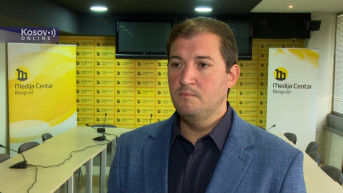
In the regular six-month report on the situation in Kosovo by United Nations Secretary-General Antonio Guterres, which will be reviewed tomorrow at a UN Security Council meeting, it is noted that the risk of escalation remains present in northern Kosovo. Milan Krstic, assistant professor at the Faculty of Political Science, believes that there is capacity within the Security Council to reach an agreement on measures that would at least declaratively call for de-escalation, which would send a good political message at this moment.
“There are certain topics around which consensus still exists in the Security Council, including issues related to stability in the Western Balkans, despite differing views on the causes of instability. There are numerous documents that Pristina is violating with its actions, and this shows that without more concrete pressure, applied through economic and political mechanisms on the government in Pristina, there will be no change in its behavior,” Krstic told Kosovo Online.
He believes that after the US elections, there could potentially be some shift in this area, and that a new administration, whether Democratic or Republican, might take a more decisive approach to this issue.
"Washington is probably the key player that could move the situation from a standstill. Of course, we should not exclude other actors, primarily the EU as the official mediator in the Belgrade-Pristina dialogue, and naturally the United Nations, given that status issues are still formally under UN jurisdiction and that Resolution 1244, which states that the territory of Kosovo and Metohija is part of Serbia, remains formally active. We must not, at any point, give up on the idea that the UN should have a voice on this matter, but unfortunately, the UN is no longer the body that can effectively implement certain actions,” Krstic emphasizes.

0 comments