
Kugler: A strong Central Europe, which includes the Western Balkans, is important to the EU
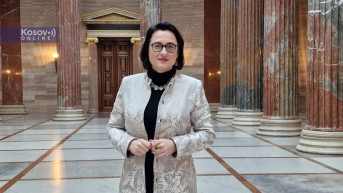
By launching the "Friends of the Western Balkans" initiative, Austria aims to ensure that, in the current situation, the European integration of the region is not neglected in favor of Ukraine and Moldova, especially since a strong Central Europe, which includes the Western Balkans, is needed for the Union, Gudrun Kugler, a member of the ruling Austrian People's Party (OVP) in the Austrian Parliament, said in an interview with Kosovo Online.
"The goal of the initiative by Austrian Foreign Minister Alexander Schallenberg is to prevent the countries of the Western Balkans from being neglected in relation to accession negotiations with Ukraine and Moldova. This is very important to Austria because it considers itself a friend of the Western Balkans. It is particularly important to Vienna for the accession negotiations of Western Balkan countries to progress quickly and not be neglected," Kugler explained.
She pointed out that the initiative was supported by six other EU countries, representing a "strong weight" within the Union.
Kugler, who is also the president of the parliamentary friendship group with Serbia, emphasized that the "Friends of the Western Balkans" would help the countries of the region integrate more quickly into the EU.
"The speed depends on the progress of the countries in the region in implementing reforms, not on the initiative itself. The initiative envisages cooperation at all levels. Hence the proposal for representatives of the Western Balkan countries to attend EU meetings. This would contribute to their familiarity with the Union and mutual cooperation," she added.
Asked if she believes in the EU enlargement to the Western Balkans by 2030, as announced, she replied that she hoped so and that Austria would provide all the necessary support.
She underscored that "Friends of the Western Balkans" was an initiative for cooperation, aiming for faster integration of the region into the EU so that the countries could "feel" the Union before accession.
In this regard, she said it was important for the countries in the region to start harmonizing their security and foreign policies on the path to the EU and position themselves now.
"We must closely cooperate in Europe and be united. There are many problems in the world, and that's why we need to work together on all issues. The initiative is the beginning of that cooperation. It is important to Austria that there is a strong Central Europe, which includes the Western Balkans. We do not see Europe only as the EU's borders but as the entire continent. Sometimes, in the West, they overlook these facts, and Austria understands the importance of a strong Central Europe," she emphasized.
At the same time, she stated that it was not only up to the Western Balkans, but the EU must also fulfill its domestic tasks.
"I see that Serbia is making a strong effort toward European integration. However, that is not enough because the EU must also fulfill its domestic tasks. In all crises, we have seen that the EU is always slow, not clear enough, and sometimes softer where a clearer response is needed. Therefore, I understand when citizens in Serbia ask if their future is to join the Union, which does not have effective answers to today's crises," Kugler said.
That is why she believes that the integration of the Western Balkans would contribute to a stronger response to crises.
"A strong voice from Central Europe, a part where there is a lot of reason and pragmatism and which has learned to collaborate, is needed for the EU to be more effective. I am pleased that I can contribute to this with my actions," she added.
Regarding the statement that Kosovo is the biggest obstacle for Serbia on the path to the EU, she sees difficulties in that issue and believes that the insistence on borders should be abandoned in the resolution.
"It is important for Austria to insist that Kosovo be integrated into the EU as well. In the Union, we see more and more of the 'Europe of regions.' If we talk about regions, then we talk less about borders. In our minds, in Austria, the approach has changed. We see borders, and it is good when there is a specific culture, tradition, and ideas, but we also see that it is good to live together with different groups in different regions. Perhaps such an approach can help in resolving conflicts when only obstacles are seen, not solutions," she noted.
Kugler also emphasized the importance of living in peace in Europe, and for that, she repeated, it was necessary for everyone to consider cooperation as the most crucial issue, rather than focusing on borders, for a better life for all.



0 comments