
Lajcak: The path to normalization is undermined; we must avoid the mines
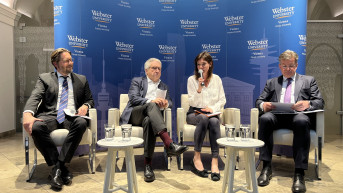
The EU Special Representative for the Belgrade-Pristina Dialogue, Miroslav Lajcak, warned in Vienna that the path towards normalization was undermined and that we must avoid "stepping on a mine".
"We have a path towards normalization. However, this path is undermined, and we must avoid stepping on any of these mines because it could lead to an explosion of the whole process," Lajcak emphasized during a discussion organized by the Austrian International Institute for Peace (IIP).
Lajcak expressed hope that the process of normalizing relations between Serbia and Kosovo, which began at the end of February after both sides accepted the European proposal, would continue.
He stressed that the situation in Kosovo is tense and there is very little mutual trust.
Lajcak pointed out that in 2022, Kosovo had been very close to a "dangerous escalation" on several occasions.
"The decision of Serbs to leave Kosovo's institutions in November created a serious vacuum in the north, which still exists. When the barricades were set up in December, we were very, very close to violence and bloodshed," he said.
He stated that the crisis had been overcome with the support of the United States, EULEX, and KFOR.
Lajcak said that the last six months of 2022 had been marked by crisis management and that the negotiations had led to the Serbian President, Aleksandar Vucic, and the Kosovo Prime Minister, Albin Kurti, accepting the European agreement on the normalization of relations at the end of February.
According to Lajcak, the formal signing of the agreement, by which, as he explained, Pristina guarantees primarily the protection of the Serbian minority in Kosovo, and Belgrade recognizes Kosovo documents, did not happen because Belgrade does not recognize Kosovo.
"Vucic could not accept any ceremony in which Serbia and Kosovo were treated equally, and Kurti does not accept a ceremony where he is treated differently from Vucic," the former Slovakian diplomat emphasized.
However, the document is binding by verbal statements, and now difficult talks are ongoing about the implementation, from the order to the timeframes for the application of individual steps.
The Director of the IIP, Stephanie Fenkart, criticized the EU, recalling that twenty years after the Summit in Thessaloniki, which had promised membership to the Western Balkan countries, only Slovenia and Croatia had been admitted.
She pointed out that it is not only Serbia that does not recognize Kosovo but also five EU countries.
"It is necessary to exert pressure on these countries to resolve this situation," Fenkart said.
The situation regarding countries that do not recognize Kosovo cannot be solved at an individual level, but rather a reform of mechanisms in the EU is necessary, according to former EU Special Envoy for Kosovo Wolfgang Petritsch.
He expressed hope that the EU's mediation abilities would succeed in achieving compromises in the Balkans.
"This year is a year of opportunity because in 2024 there will be elections in the EU, US, and other places," Petritsch stated.

0 comments