
Professor Jimenez: Spain, by accepting passports, has not recognized Kosovo
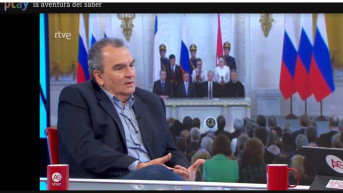
Professor Dr. Jose Angel Lopez Jimenez, a Professor of International Public Law at the Comillas University in Madrid and a member of the Spanish research network for Central and Eastern Europe, also expressed in an interview for Kosovo Online that by accepting Kosovar passports, Spain had not recognized Kosovo.
Spain's decision to recognize Kosovo's passports, despite not recognizing the state, surprised many. What is the key reason behind Spain's decision?
Spain is the last EU country to accept Kosovo's passport as a travel document in the Schengen zone for stays that do not include work contracts and up to 180 days. Other EU countries that are not EU members but belong to the Schengen area or EU members that have not recognized Kosovo have already done so.
Spanish officials are unequivocal in their refusal to recognize Kosovo's independence. What could change such a clear stance?
The potential accession of Kosovo to the EU would completely change the scenario, as it would force five EU member states, including Spain, which do not recognize Kosovo's statehood, to either maintain or change their stance. If this accession were to happen, it would imply tacit recognition.
The international community claims that the "Kosovo case" is a precedent?
The Kosovo precedent is very disappointing due to the position taken by the International Court of Justice in its advisory opinion in 2010. It did not clearly distinguish between the right to self-determination of peoples, a structural principle of international law, and the right to secession, regulated by the internal legal system of each state.
The biggest fear of the Spanish is that this "recipe" will be replicated in their country. We are talking about Catalonia, right?
Kosovo and Vojvodina were a part of the territorial integrity of Serbia, with a specific territorial status guaranteeing their internal self-determination. This is very similar to the case of Catalonia in Spain. We must bear in mind that the principle of the territorial integrity of states is also another fundamental norm of contemporary international law that guarantees internal and international stability.
Five EU members do not recognize Kosovo. Still, Serbia, which wants to join the European Union, is conditioned by recognition. What is your comment?
Support for the territorial integrity of Serbia was noticeably diluted by the widespread international recognition of Kosovo's independence. I believe the crucial moment will come with future EU enlargements and the accession of the Western Balkans, as well as if there is a change in Kosovo's status in the UN: from observer status to full membership.
How familiar are you with the situation in the Western Balkans, especially Kosovo? How is the situation seen in Southern Europe?
From Spain, outbreaks of conflict, such as the issue of Kosovo's license plates or the situation of the Serb minority in Mitrovica, concern only experts interested in Eastern Europe. Especially now that everyone is focused on conflicts in Ukraine and Gaza. Serbia's future entry into the EU would significantly bring public opinion closer to this region.


0 comments