
Bislimi: Kosovo must not miss the opportunity to become part of the U.S. gas project
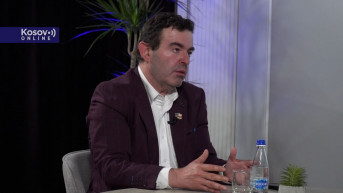
Faton Bislimi, a representative of the Albanian-American Civic League, has called on Kosovo's institutions to find a way to ensure the country's inclusion in the U.S.-backed gas project, arguing that its importance extends far beyond the energy sector. According to him, the debate over gas should not be limited to costs and economic benefits, as energy is directly linked to security and foreign policy, Kosovo Press reports.
Bislimi said Kosovo should consider all available alternatives that would enable it to join the project, whether through the LNG terminal in Vlora or other infrastructure options, stressing that the priority should be to preserve the possibility of becoming part of the U.S. initiative.
"You have seen the latest op-ed by the U.S. representative in Kosovo, in which she states, or suggests, that we have a certain deadline—if I am not mistaken—before the window for Kosovo's inclusion in the U.S. gas project closes. Now, if we have been given another year, it is Kosovo's responsibility to find a way to ensure that this window does not close. Once it does, there will no longer be any opportunity. We can offer a million reasons, but the window will have closed. It is our obligation to find a solution that enables Kosovo to join this project before that happens. Whether through the Vlora alternative or by constructing a gas pipeline through Kosovo, there are several possible options," Bislimi told Kosovo Press.
He added that the best possible option should be selected—one that not only serves Kosovo's national economic interests but also advances its geostrategic interests without jeopardizing relations with the United States.
"I am convinced that such a solution will be found. If it is not, that will be our failure," Bislimi stressed.
He also said that although there have been disagreements between Pristina and Washington on various issues, including developments in northern Kosovo and the gas project, these differences must not undermine the strategic partnership between Kosovo and the United States.
"There have been differences in approaches and orientations. These disagreements have existed and have been public. You know how many times there have been disagreements over the interventions carried out in northern Kosovo. There have been many. Today, there is also a certain divergence of views regarding the U.S. gas project. That is evident," Bislimi noted.
According to him, Kosovo must never allow itself to drift away from the orbit of U.S. foreign policy.
"That does not mean we should stop defending our national interests until the very last moment. On the contrary, I believe we have no other option. Stepping outside the orbit of U.S. foreign policy would leave Kosovo with no room to stand on its own, because we do not possess the geopolitical or geostrategic weight to act as a decisive factor in international politics, or even in the Balkans. Our strength in international affairs is tied to our geostrategic orientation. Of course, there are fluctuations. There are agreements and discussions, but these disagreements and debates should never escalate into conflict, let alone, God forbid, a rupture in relations," Bislimi emphasized.
He further argued that the debate over the U.S. gas project should not be viewed solely as an energy issue, but as one directly linked to security and foreign policy.
Bislimi said every initiative coming from the United States should be assessed in light of Kosovo's interests, while also taking into account the strategic importance of its partnership with Washington.
"When we talk about gas, we are talking about energy and security. And when we talk about security, we are also talking about foreign policy. We are living through a period of profound changes in international politics. Whatever the United States offers us, whatever is asked of us, every time we have stood alongside the United States, we have emerged as winners. As far as gas is concerned, I do not consider myself an expert on energy or gas, but I believe that, both economically and politically, Kosovo must always look at both sides of the coin. One side is what we hear every day—the geostrategic and geopolitical importance of Kosovo joining the U.S. gas project. The other side is the interests of the Republic of Kosovo in relation to this major project, because it is by no means a small one. I believe we should find a way to become, definitively, part of the geostrategic and geopolitical interests of the United States, with or without gas. The point is not that receiving gas should be viewed as a reward, while not receiving it should be seen as a punishment," Bislimi said.
He also stressed that the Albanian community in the United States had played a special role in drawing U.S. foreign policy attention to Kosovo and in building support for the processes that ultimately led to Kosovo's freedom and independence.
"The Albanian community in the United States is the cornerstone of Kosovo's freedom and independence. Our people in America achieved what seemed impossible in order to place Kosovo on the agenda of U.S. foreign policy—and much more than that. They played a crucial role in lobbying and coordination. You cannot now claim that because you have an embassy and a Ministry of Foreign Affairs, you no longer need the Albanian community in America. The Albanian community in the United States remains Kosovo's best ambassador. There may be differences in approach, but never in the objective. The objective has always been the same—to serve Kosovo and elevate Kosovo-U.S. relations to the highest possible level," Bislimi concluded.
A debate over the U.S.-backed gas project has been ongoing in Kosovo ever since the government rejected the initiative several years ago.
The United States has repeatedly called on Kosovo to join regional LNG projects, arguing that energy security is essential for economic development and attracting foreign investment.
Sources interviewed recently by Kosovo Online also argued that the United States has no hidden agenda, but rather seeks to reduce Russia's influence in the energy sector across the Western Balkans while promoting exports of U.S. natural gas.


0 comments