
Macut: Regional unity more important today than ever before
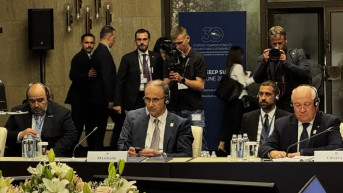
Serbian Prime Minister Djuro Macut stated today in Sofia, at the Summit of the South-East European Cooperation Process (SEECP), that Serbia will remain a reliable and constructive partner in all regional initiatives that contribute to peace, stability, sustainable development and greater connectivity.
Addressing the Summit, Macut emphasized that, in a world marked by geopolitical uncertainty, regional unity is more important than ever. He added that Serbia remains committed to strengthening regional cooperation in addressing shared challenges, including organized crime, irregular migration, cyber threats, hybrid risks, natural disasters and other emergencies that increasingly transcend national borders.
According to the Prime Minister, the 30 years of SEECP have demonstrated a simple yet important lesson: that progress is achieved through partnership and dialogue, rather than through isolation and division.
"Three decades of SEECP represent far more than an institutional anniversary. They testify to the political maturity of our region and to our shared understanding that cooperation is not a matter of choice, but a prerequisite for peace, stability and prosperity," the Prime Minister stressed.
He noted that Serbia can be satisfied with the progress achieved in recent years, as the Western Balkans region has undergone significant political, economic and social transformation.
"Nevertheless, the challenges facing Serbia remind us that the task of building a stable and prosperous South-East Europe is not yet complete," the Prime Minister said, adding that Serbia views regional cooperation as one of the key pillars of its foreign policy and remains committed to strengthening good-neighbourly relations, advancing dialogue and supporting initiatives that deliver tangible benefits to citizens.
According to Macut, geopolitical uncertainty, security risks, energy-related challenges, climate change, technological transformation and demographic pressures affect all countries, and no state can effectively address these challenges on its own.
"Stronger regional economic ties are not merely an economic objective; they are a strategic investment in the long-term stability and resilience of the region. We must continue building a region in which goods, services, capital, knowledge and people move more freely, where companies can grow across borders, and where innovation, research and entrepreneurship receive additional support," Macut said.
The Prime Minister also reaffirmed that Serbia remains fully committed to its European path and to implementing reforms that accelerate the country's economic integration into the European Union's single market.
In that context, he stressed that Serbia's accession to the Single Euro Payments Area (SEPA) represents an important step toward closer economic integration with the EU and greater benefits for both citizens and businesses.
Macut further noted that the European Commission has once again confirmed that Cluster 3 is technically ready to be opened, expressing confidence that its opening would provide additional momentum to Serbia's EU accession process and strengthen the country's contribution to the European economic area.
"Serbia supports innovative approaches aimed at the gradual inclusion of candidate countries in specific European Union policies, programmes and institutional frameworks even prior to full membership," Macut emphasized.
According to him, Serbia would consider EU membership acceptable even without veto rights, provided that such membership ensured access to the single market and the free movement of goods, people and capital.

0 comments